
In a restaurant or shop, fire damage has a second dimension: every closed day is lost revenue, and smoke — not flame — usually decides how many closed days there are. A small kitchen fire can smoke-load a whole dining room, the inventory, and the HVAC system that connects everything.
Here's what recovery looks like when the property is also the livelihood.
Why does smoke reach so much further than the fire?
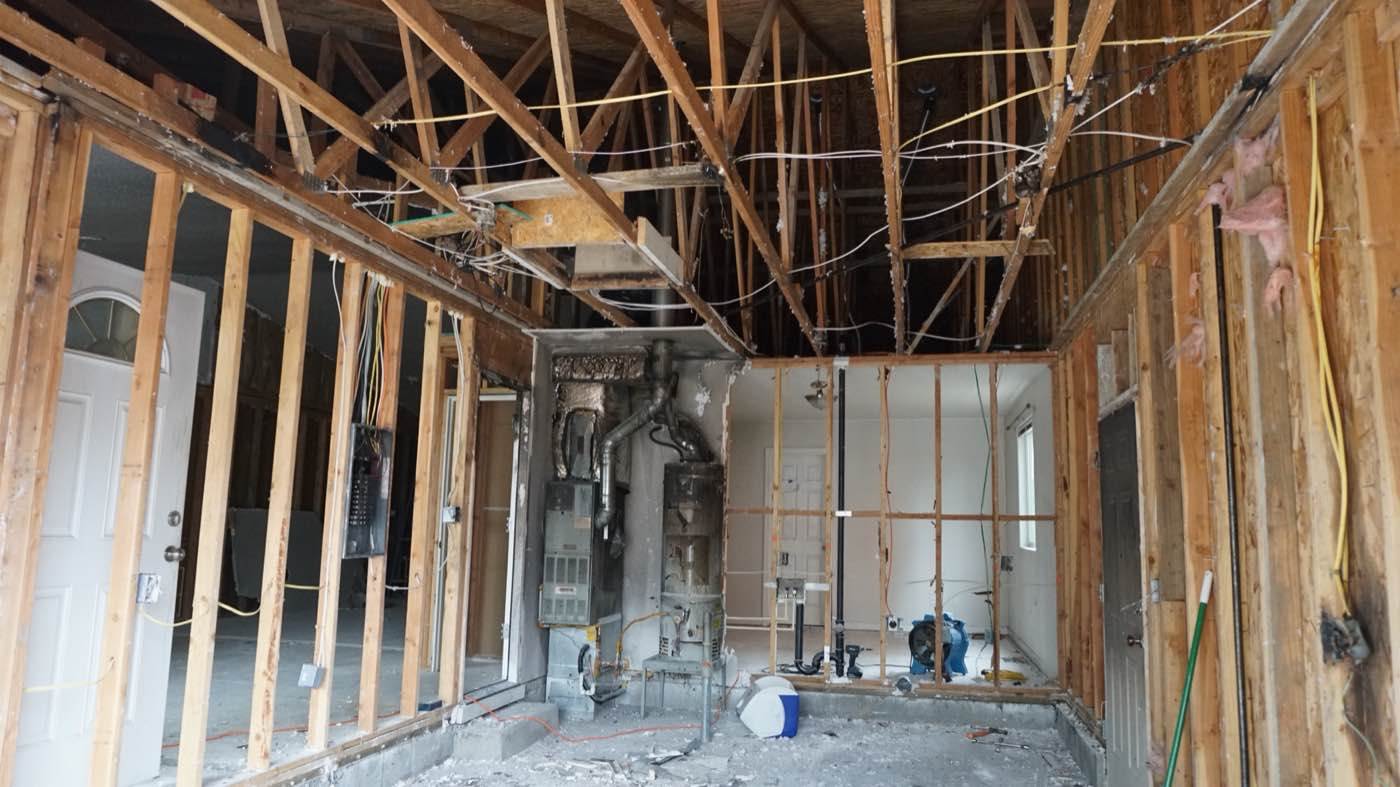
Smoke follows air paths — HVAC runs, ceiling plenums, doorways — and deposits acidic soot residue on everything along the way. Protein fires (kitchen grease and food) are their own beast: a thin, nearly invisible film with a penetrating odor that mediocre cleaning leaves behind permanently.
That's why the damage assessment walks the whole space, not the burn zone, and why the HVAC system gets inspected before it runs again — running smoke-loaded air paths can re-contaminate every cleaned room.
What happens to inventory, equipment, and fixtures?
Triage by category, documented item by item: what cleans and restores (hard goods, some equipment, fixtures), what specialty processes might save (textiles, electronics, documents — Summit's contents teams handle these paths), and what's a documented loss for the claim.
Food service has a harder line: exposed food and anything food-contact that can't be verifiably sanitized is generally a loss, and your health authority has the final word. Make the case for the equipment; don't make it for the walk-in's contents.
What does the health department need before re-opening?
For food service, re-opening isn't just construction sign-off — your county health authority will need the facility to meet code again: sanitizable surfaces, functioning systems, and no contamination path from the fire's residue. Engage them early with your recovery plan rather than surprising them with a finished project.
A restoration contractor who documents cleaning standards and materials helps here too — the same file that serves the insurance claim answers the inspector's questions.
How does phasing protect revenue?
Recovery sequencing should be a business decision, not just a construction one. Sometimes that means restoring the revenue-critical zone first (the kitchen line, the sales floor) while back-of-house rebuild continues; sometimes partial re-opening behind clean containment is realistic.
It's worth asking your contractor to plan against a revenue calendar. Summit carries fire projects from emergency board-up through rebuild as one scope — with our 1-year unconditional labor warranty on installation work — which is what makes revenue-first sequencing actually manageable.
What about the claim side for a business fire?
Commercial fire claims stack coverages: property (structure and improvements), contents and inventory, equipment, and business interruption. Each wants documentation — and BI wants your revenue records, so involve your bookkeeper early.
The scope-of-loss discipline from our claims guides applies doubly here, and Summit's coordinators work directly with commercial adjusters. If a scope you've received seems thin for what you're looking at, ask for a line-by-line scope review before accepting it.
Below the surface · Fire & smoke damage
Where smoke goes after the fire is out — the whole-house map
Flames damage one room; smoke, soot, and firefighting water reach the whole house. Here's where a fire loss actually travels — and why cleanup is more than repainting.
Tap or Tab to a numbered point on the diagram to see what happens there — and how we resolve it. Every point is also written out in the list below.
All 7 points, written out
-
Soot in the HVAC system
Often invisible
Smoke travels through ductwork during the fire, and a contaminated system can re-spread soot and odor to cleaned rooms for weeks.
Summit: We evaluate and clean the HVAC system as part of the fire scope, not as an afterthought.
-
Smoke inside wall cavities
Often invisible
Pressurized smoke pushes through outlets, gaps, and top plates into wall cavities, leaving residue where no brush can reach.
Summit: We check cavities near the loss with meters and open or seal them based on what the readings show.
-
Attic smoke & insulation
Often invisible
Hot smoke rises into the attic, where loose insulation soaks up odor that drifts back down every warm day.
Summit: We inspect the attic on every significant smoke loss and remove odor-loaded insulation when cleaning can't recover it.
-
Odor absorbed into framing & soft goods
Often invisible
Framing, carpet, upholstery, and clothing absorb smoke odor at a molecular level — surface wiping alone won't remove it.
Summit: We pair source cleaning with odor strategies like hydroxyl treatment, chosen for occupied homes.
-
Corrosive residue on electronics & wiring
Often invisible
Soot is acidic — it etches circuit boards, wiring, and metal finishes in the days after the fire, even in rooms that never saw flame.
Summit: We prioritize assessing and cleaning electronics early, before corrosion becomes permanent.
-
Water damage from firefighting
Visible
The water that put the fire out soaks floors, walls, and everything below the fire room — most fire losses are also water losses.
Summit: We run structural drying alongside fire cleanup so a fire claim doesn't quietly become a mold claim.
-
Structural charring behind finishes
Often invisible
Fire can char framing inside walls and ceilings while the drywall over it looks merely smoke-stained.
Summit: We expose and evaluate the structure where heat traveled, and rebuild under Oregon CCB# 153107 and Washington L&I# SUMMICG857ML licensing.
Worried any of these points describes your home? Moisture meters and a trained eye settle it in one visit — the look is free.
Questions we hear about this
Can smoke odor really be removed from a dining room?
Yes — with source removal, not masking. Soot cleaning, treatment or removal of affected porous materials, and structure/contents deodorization under IICRC fire-restoration standards. If a proposal leans on sprays and sealers alone, get another opinion.
Our fire was small — do we really need professional cleanup?
Small fires with big smoke are the classic underestimate, especially protein fires. An assessment costs you a conversation; wrong DIY cleaning can set residue and odor permanently into finishes you'd otherwise save.
Who tells us when we can re-open?
Building officials for the structure, the health department for food service, and practically, your own standard for the customer experience — a space that smells like the fire isn't ready for guests even when it's legal to open.
How fast can recovery start?
Immediately after the fire department releases the scene: emergency board-up, smoke-spread control, and assessment same-day. Summit's line is answered live 24/7 (800-769-1553), with on site response within 2 hours for active fire emergencies in our service area.
Next step
You understand the problem — now weigh your options.
Side-by-side comparisons show where DIY genuinely works, what the methods differ on, and how restoration companies actually vary.