
Below the surface
What's really damaged — look inside the walls
Homeowners consistently underestimate hidden damage. These six interactive cutaways show where each kind of loss actually travels — inside walls, under floors, through attics, crawl spaces, and ducts — and how Summit resolves every point.
01 / 06
Below the surface · Water damage
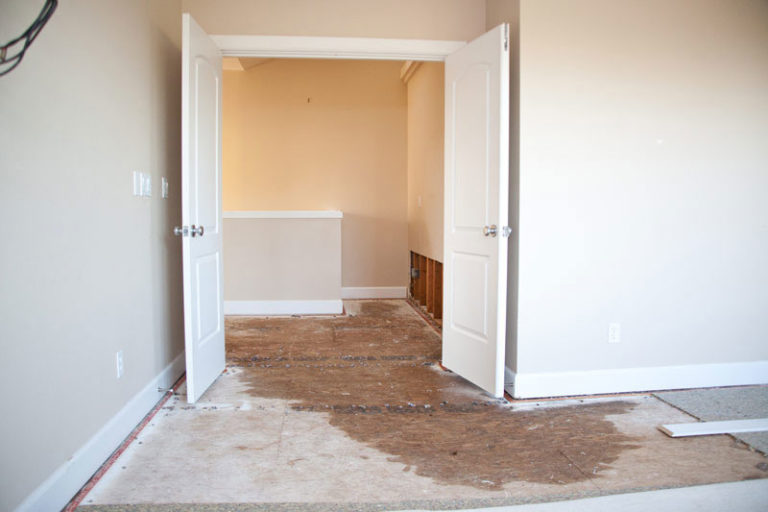
What water damage really touches — a look inside the walls
The puddle you can see is usually the smallest part of a water loss. Water wicks, travels, and pools out of sight — tap each numbered point to see where it goes and how we resolve it.
Tap or Tab to a numbered point on the diagram to see what happens there — and how we resolve it. Every point is also written out in the list below.
All 9 points, written out
-
Drywall above the water line
Often invisible
Standing water wicks up through drywall well above the stain you can see, so a 2-inch puddle can mean 2 feet of wet wall.
Summit: We map the true moisture line with meters and dry or remove drywall to that line — not just to the visible stain.
-
Wall-cavity insulation
Often invisible
Fiberglass insulation inside the wall soaks up water, compresses, and holds moisture against the framing long after surfaces feel dry.
Summit: We open the cavity where readings call for it, remove saturated insulation, and dry the framing directly.
-
Subfloor & underlayment
Often invisible
Water slips between flooring layers, swelling the underlayment and subfloor beneath finishes that still look fine on top.
Summit: We lift flooring where needed and dry or replace the subfloor so the new floor goes down on a sound, dry base.
-
Hardwood cupping
Visible
Hardwood boards absorb moisture from below and curl upward at the edges — cupping you can see and feel underfoot.
Summit: Caught early, specialty drying mats can often save cupped hardwood instead of tearing it out.
-
Cabinet toe-kicks
Often invisible
Water pools in the enclosed void under cabinets, where it can't evaporate and quietly damages the cabinet base.
Summit: We remove kick plates and move air through the void so cabinets dry in place whenever possible.
-
Sill plates & framing
Often invisible
The wood plates at the base of every wall sit right in the water path and can be critically wet within the first hour.
Summit: We direct-dry structural framing and log moisture readings until it verifiably meets dry standard.
-
Crawl space pooling & vapor
Often invisible
Water finds the crawl space, where it pools on the vapor barrier and feeds humidity back up into the house for weeks.
Summit: We extract standing water, dry the crawl space, and address the vapor barrier so moisture stops migrating upward.
-
HVAC ducts
Often invisible
Wet ductwork spreads humidity — and anything growing in it — to every room the system serves.
Summit: We inspect ducts on water losses and clean or dry them before the system runs again.
-
The 24–48 hour mold window
Often invisible
In Oregon's damp climate, hidden moisture behind baseboards and inside cavities can start growing mold within 24–48 hours.
Summit: We respond 24/7 and dry to standard fast, precisely because that window is short.
Worried any of these points describes your home? Moisture meters and a trained eye settle it in one visit — the look is free.
02 / 06
Below the surface · Fire & smoke damage
Where smoke goes after the fire is out — the whole-house map
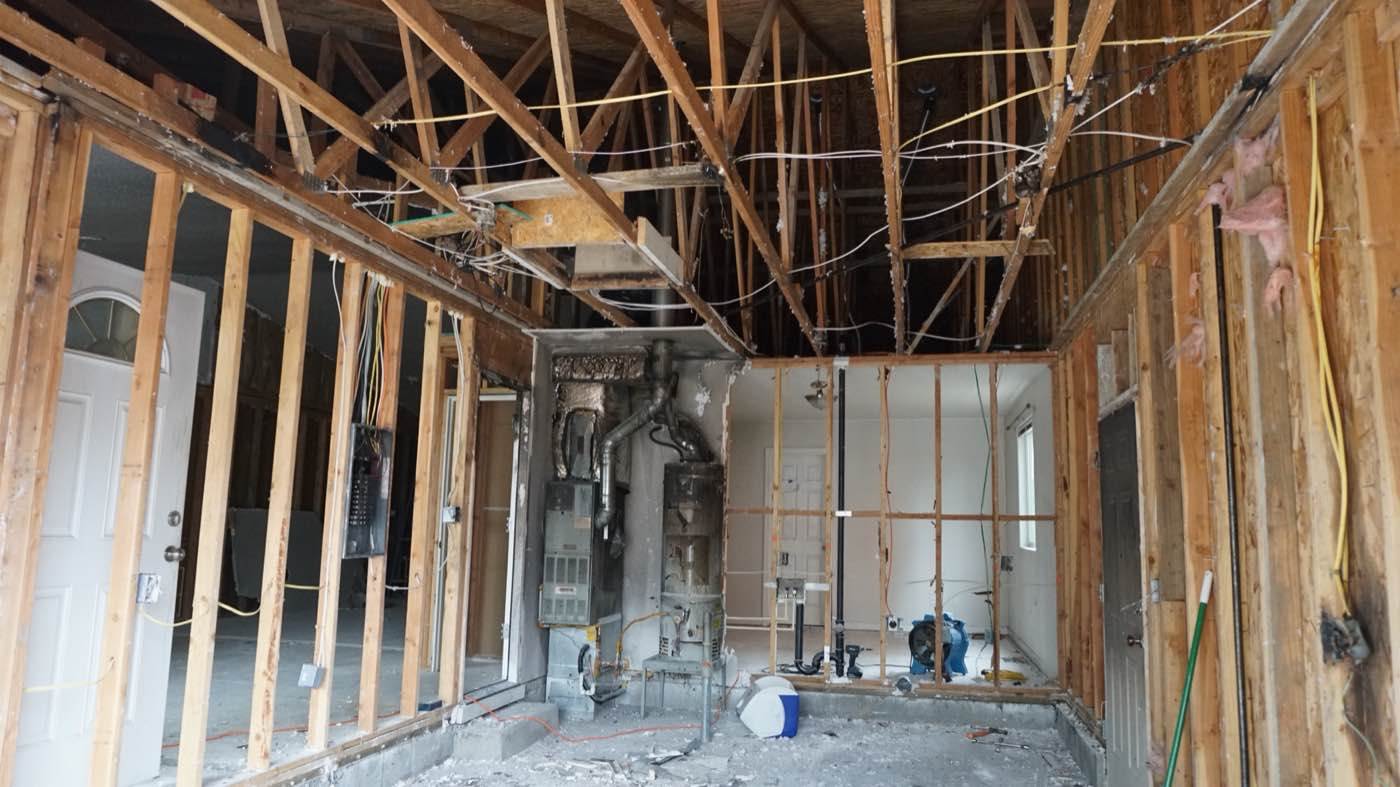
Flames damage one room; smoke, soot, and firefighting water reach the whole house. Here's where a fire loss actually travels — and why cleanup is more than repainting.
Tap or Tab to a numbered point on the diagram to see what happens there — and how we resolve it. Every point is also written out in the list below.
All 7 points, written out
-
Soot in the HVAC system
Often invisible
Smoke travels through ductwork during the fire, and a contaminated system can re-spread soot and odor to cleaned rooms for weeks.
Summit: We evaluate and clean the HVAC system as part of the fire scope, not as an afterthought.
-
Smoke inside wall cavities
Often invisible
Pressurized smoke pushes through outlets, gaps, and top plates into wall cavities, leaving residue where no brush can reach.
Summit: We check cavities near the loss with meters and open or seal them based on what the readings show.
-
Attic smoke & insulation
Often invisible
Hot smoke rises into the attic, where loose insulation soaks up odor that drifts back down every warm day.
Summit: We inspect the attic on every significant smoke loss and remove odor-loaded insulation when cleaning can't recover it.
-
Odor absorbed into framing & soft goods
Often invisible
Framing, carpet, upholstery, and clothing absorb smoke odor at a molecular level — surface wiping alone won't remove it.
Summit: We pair source cleaning with odor strategies like hydroxyl treatment, chosen for occupied homes.
-
Corrosive residue on electronics & wiring
Often invisible
Soot is acidic — it etches circuit boards, wiring, and metal finishes in the days after the fire, even in rooms that never saw flame.
Summit: We prioritize assessing and cleaning electronics early, before corrosion becomes permanent.
-
Water damage from firefighting
Visible
The water that put the fire out soaks floors, walls, and everything below the fire room — most fire losses are also water losses.
Summit: We run structural drying alongside fire cleanup so a fire claim doesn't quietly become a mold claim.
-
Structural charring behind finishes
Often invisible
Fire can char framing inside walls and ceilings while the drywall over it looks merely smoke-stained.
Summit: We expose and evaluate the structure where heat traveled, and rebuild under Oregon CCB# 153107 and Washington L&I# SUMMICG857ML licensing.
Worried any of these points describes your home? Moisture meters and a trained eye settle it in one visit — the look is free.
03 / 06
Below the surface · Mold
Where mold hides — the places a flashlight never reaches
Mold grows where moisture sits and light doesn't — which is why what you can see is rarely the whole colony. These are the places we check on every remediation.
Tap or Tab to a numbered point on the diagram to see what happens there — and how we resolve it. Every point is also written out in the list below.
All 8 points, written out
-
Behind drywall & wallpaper
Often invisible
The backside of drywall and the paste under wallpaper feed mold in the dark — a wall can look clean while the cavity side is colonized.
Summit: We inspect with moisture meters and open walls under containment, so spores don't spread to clean rooms.
-
Under carpet & pad
Often invisible
Carpet pad holds moisture for days after a leak, and mold establishes between pad and subfloor before any smell reaches the room.
Summit: We lift flooring at the wet edge, remove unsalvageable pad, and treat the subfloor beneath it.
-
Attic roof sheathing
Often invisible
Roof leaks and poor attic ventilation let condensation feed mold across the underside of the roof deck — invisible unless someone climbs up.
Summit: We remediate the sheathing and flag the ventilation or leak problem that caused it.
-
Crawl space framing
Often invisible
Damp Pacific Northwest crawl spaces grow mold on joists and posts that quietly affects the air in the living space above.
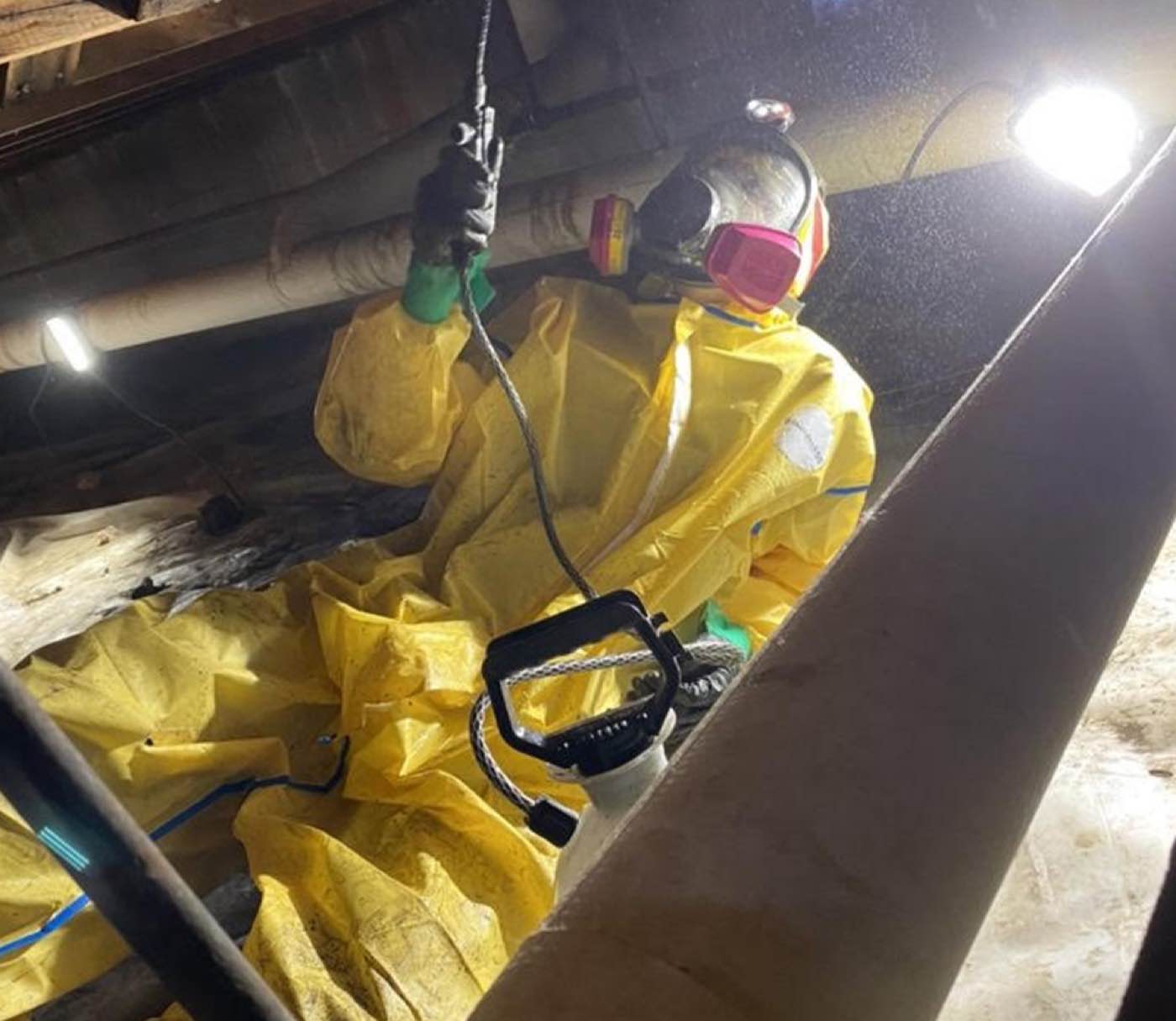
Summit: Our crews suit up and remediate crawl space framing directly — it's some of our most common work.
-
Inside the HVAC system
Often invisible
Moisture in ducts or at the air handler lets mold grow inside the one system that touches every room.
Summit: We inspect the HVAC system during remediation and clean it when growth or spore load calls for it.
-
Window sills & frames
Visible
Winter condensation on windows feeds mold along sills, frames, and the wall below — one of the few places you can watch it happen.
Summit: We clean the visible growth and check whether the wall below the window is wet inside.
-
Spores in the air
Often invisible
Disturbed mold releases spores that circulate house-wide, which is how a basement problem becomes a bedroom symptom.
Summit: We work under containment with negative air and HEPA filtration so remediation doesn't spread the problem.
-
The moisture source
Often invisible
Every colony has a water source — a slow leak, condensation, or ground moisture. Kill the mold without finding it and the mold returns.
Summit: We trace the moisture to its source and make fixing it part of the scope, not a footnote.
Worried any of these points describes your home? Moisture meters and a trained eye settle it in one visit — the look is free.
04 / 06
Below the surface · Storm damage
After the storm — how one breach travels through the whole envelope
Storm damage starts at the roofline, but the water it lets in keeps moving long after the wind dies down. Here's the path a breach takes from shingle to crawl space.
Tap or Tab to a numbered point on the diagram to see what happens there — and how we resolve it. Every point is also written out in the list below.
All 8 points, written out
-
Lifted & missing shingles
Visible
Wind lifts or strips shingles, exposing the roof deck — the damage you can see from the driveway.
Summit: We tarp and board up fast to stop active intrusion, then document the roof for your claim.
-
Flashing & underlayment breaches
Often invisible
Even with shingles in place, wind-worked flashing and torn underlayment let water past the roof's real waterproof layer.
Summit: We inspect beyond the obvious shingle damage so the fix covers the actual leak path.
-
Soaked attic insulation
Often invisible
Intruding water flattens attic insulation, which loses its value and holds moisture against the ceiling below.
Summit: We check the attic after every roof breach and remove saturated insulation before it stains ceilings or grows mold.
-
Water tracking down wall cavities
Often invisible
Water follows framing from the attic down inside the walls, so a roof leak can surface as a wet baseboard two floors below.
Summit: We trace the full travel path with moisture meters instead of only drying where the stain shows.
-
Wind-driven rain at windows & siding
Often invisible
Sideways rain forces past window seals and behind siding, wetting sheathing and cavity insulation with little visible trace.
Summit: We check window and siding penetrations on the storm-facing side, not just the roof.
-
Tree-impact structural damage
Visible
A falling limb can crack rafters and shift framing beyond the visible puncture point.
Summit: We evaluate the structure around any impact and handle repair through licensed reconstruction.
-
Gutter & ice-dam backups
Often invisible
Clogged gutters and ice dams push melting water backward under the shingles at the eave — into the attic and the wall top plates.
Summit: We dry the eave-line intrusion and document the cause so the repair addresses drainage, not just drywall.
-
Saturated exterior sheathing
Often invisible
Sheathing behind siding stays saturated long after the storm passes, weakening the wall from a layer no one sees.
Summit: We meter the wall assembly from inside and dry the sheathing before it delaminates or grows mold.
Worried any of these points describes your home? Moisture meters and a trained eye settle it in one visit — the look is free.
05 / 06
Below the surface · Trauma & biohazard
Why professional biohazard cleanup goes deeper than the surface
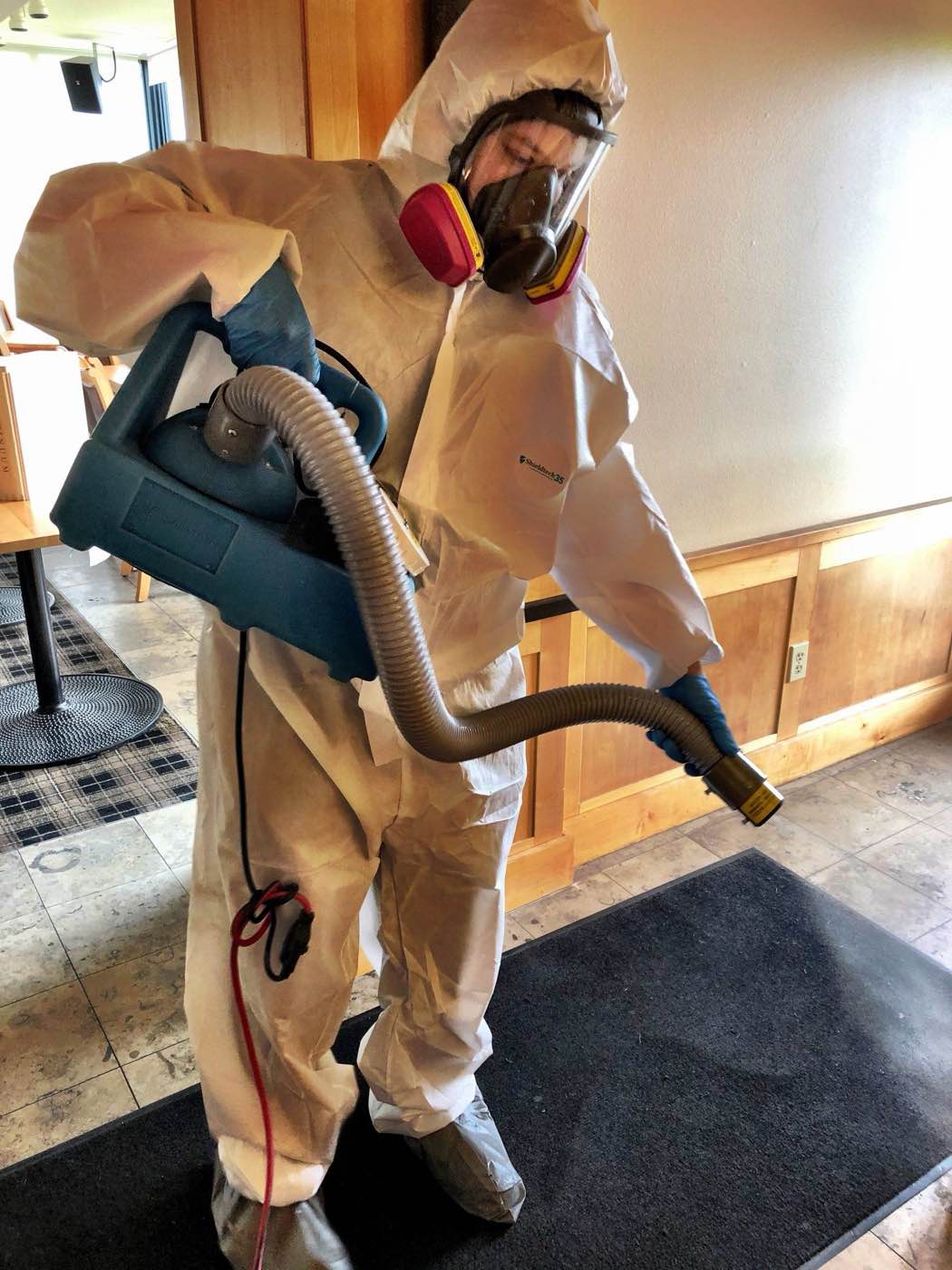
After a loss like this, families shouldn't carry the cleanup too. Written with care: here is why trained, discreet remediation matters — affected materials absorb more than the eye can see.
Tap or Tab to a numbered point on the diagram to see what happens there — and how we resolve it. Every point is also written out in the list below.
All 6 points, written out
-
Porous materials
Often invisible
Carpet, pad, and upholstery are absorbent — surface cleaning can't reach what porous materials have taken in.
Summit: We assess what can be safely sanitized and remove what cannot, with clear explanation at every step.
-
Between floor layers
Often invisible
Fluids seep through seams into the underlayment and subfloor, beneath flooring that appears clean after wiping.
Summit: We check between the layers and treat or remove the subfloor where seepage has reached it.
-
Wall cavities at the baseboard
Often invisible
Liquid follows the floor edge under baseboards and into the wall cavity, out of reach of any surface cleaning.
Summit: We inspect the baseboard line and open the cavity where needed so nothing is sealed in.
-
HVAC circulation
Often invisible
The home's air system can carry odor and airborne particulates to rooms far from the affected area.
Summit: We evaluate the HVAC pathway and include it in the remediation scope when it's involved.
-
Odor at the source
Often invisible
Odor persists when the source material remains — masking agents fade, and the reminder returns.
Summit: We remove or treat the source itself, then verify the air before we call the space done.
-
Sanitization & discreet disposal
Often invisible
Affected materials can't go out with household trash, and 'looks clean' isn't a sanitization standard.
Summit: We handle certified disposal in unmarked discretion where requested, and verify sanitization before returning the space to you.
Worried any of these points describes your home? Moisture meters and a trained eye settle it in one visit — the look is free.
06 / 06
Below the surface · Build & restore
The rebuild map — every layer between demo and done
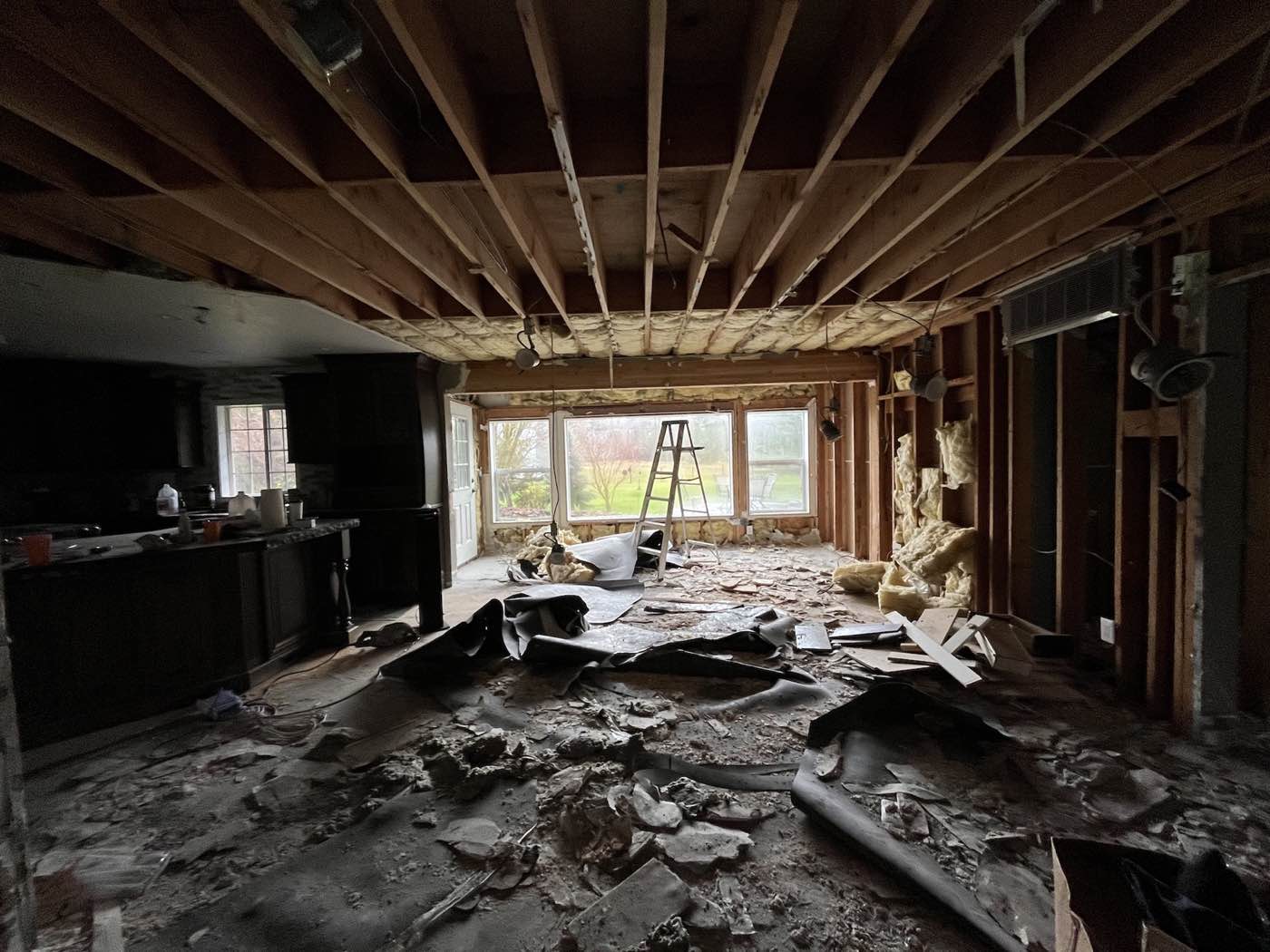
Reconstruction puts the house back together in the right order, layer by layer. Here's what a licensed rebuild actually covers — from framing to the final walkthrough.
Tap or Tab to a numbered point on the diagram to see what happens there — and how we resolve it. Every point is also written out in the list below.
All 8 points, written out
-
Structural framing repair
Rebuild step
Damaged studs, joists, and plates are sistered or replaced first — everything else hangs on straight, sound framing.
Summit: Our licensed crews (Oregon CCB# 153107 · WA L&I# SUMMICG857ML) repair structure to code before any finish work begins.
-
Insulation & vapor barrier
Rebuild step
New insulation and a correct vapor barrier go in while the walls are open — the one chance to get the assembly right.
Summit: We restore the insulation and moisture-control components so the rebuilt wall performs as intended.
-
Drywall, texture & paint
Rebuild step
Hanging, taping, texture-matching, and paint turn the open framing back into finished rooms.
Summit: We match the existing texture and sheen so the repair doesn't announce itself.
-
Flooring systems
Rebuild step
Subfloor, underlayment, and finish flooring go back as a system, on a verified-dry base.
Summit: We rebuild the full floor stack rather than laying new finish over a compromised layer.
-
Trim & cabinetry
Rebuild step
Baseboard, casing, and cabinet runs are the detail layer that makes a repaired room feel whole again.
Summit: Our carpenters rebuild and reinstall trim and cabinetry, matching profiles where the originals survive.
-
Matching existing finishes
Rebuild step
A rebuild has to meet the undamaged half of the house — flooring runs, paint colors, and trim profiles that already exist.
Summit: We source and blend materials so the line between old and new disappears.
-
Permits & code upgrades
Rebuild step
Rebuilds trigger current building code — which can mean upgraded wiring, venting, or smoke detection the original house never had.
Summit: We handle permitting and scope required code upgrades into the plan so they're not a surprise later.
-
Final walkthrough
Rebuild step
The job ends with you walking every room against the scope — not with a truck quietly leaving.
Summit: We do a documented final walkthrough with you and resolve punch-list items before we call it complete.
Worried any of these points describes your home? Moisture meters and a trained eye settle it in one visit — the look is free.
Keep exploring
Seeing one of these signs at home right now? The Damage Signs library decodes stains, smells, and buckling — and says honestly when it's nothing.
Not sure what's behind your walls? We'll look — free.
Moisture meters, thermal imaging, and 45+ years of Oregon losses. One inspection, straight answers, no obligation.