
Insurance claims, handled
We coordinate directly with your insurance adjuster.
We provide the documentation needed to support our restoration scope, and help simplify the payment process. Summit has coordinated restoration claims with Oregon and Washington carriers since 1978.
We document everything
Photos, moisture readings, and a detailed itemized scope from the first walkthrough. Strong documentation is what keeps a claim fair and complete.
We talk to your adjuster
48+ years of working alongside Oregon and Washington adjusters. Your Summit project manager handles the carrier communication while our crew works.
We coordinate the payment process
We coordinate directly with your insurance adjuster, provide the documentation needed to support our restoration scope, and help simplify the payment process. Insurance payments may be issued to you, your mortgage company, Summit, or several parties depending on your carrier and claim.
One scope, start to finish
Because Summit handles mitigation through rebuild, your claim has one scope and one accountable contractor — no gaps between companies for items to fall through.
Independent by choice
Our recommendations follow what we document at your property.
Summit has chosen to remain an independent restoration company rather than join a carrier's preferred vendor program. That independence lets us base our recommendations on the documented condition of your property and established restoration standards — while we work alongside your adjuster every step of the way. We guide you from the first call through the final walkthrough, and our crews are empowered to make decisions on the spot.
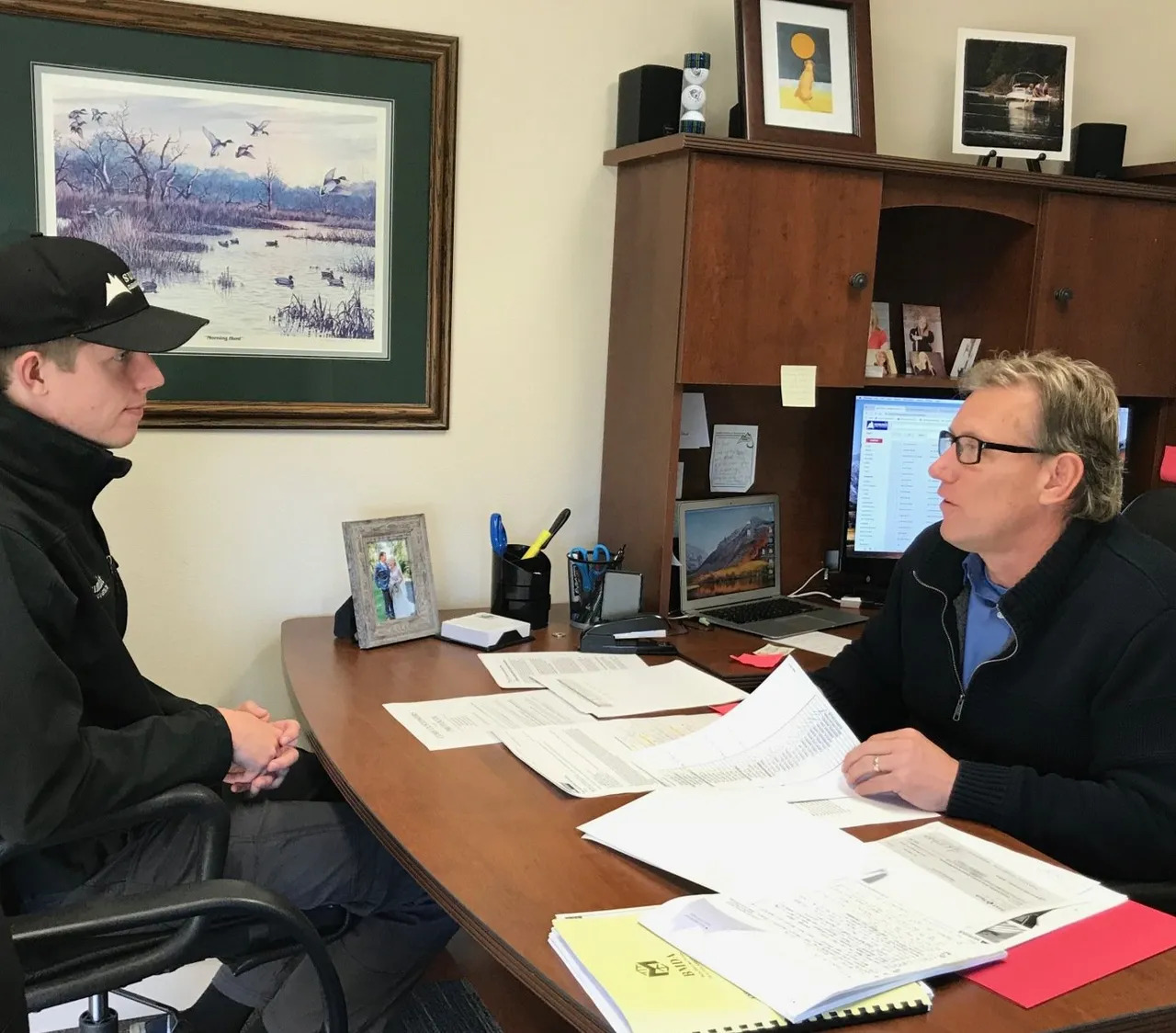
"Justin and Daniel met with multiple adjusters to coordinate documentation on my behalf" — and the claim was approved.
How it works
Your claim, from first call to final walkthrough.
The scariest part of property damage is usually the claim, not the water. Here's exactly what happens when Summit runs it with you.
800-769-1553Deductible a strain? See financing through Acorn Finance. Not sure your scope is complete? Request a Free Inspection.
The claim runs on one track; the repair runs on another. To see the second one — the restoration journey step by step — from the first inspection through the final walkthrough.
- 1
Call Summit first — or right after your carrier
You don't need the claim approved before we stop the damage. Emergency mitigation protects your property and supports a well-documented claim.
- 2
We inspect and document the loss
Our crew photographs everything, takes moisture readings, and builds an itemized scope your adjuster can work with line by line.
- 3
Your project manager works directly with the adjuster
Your project manager works directly with the adjuster on the restoration scope and pricing, providing photographs, measurements, moisture readings, estimates, and other supporting documentation.
- 4
We restore, rebuild, and document every step
We help simplify the restoration process by coordinating the documentation and communication related to our work and keeping you informed throughout the process.
Get claim-ready in two minutes
Check what you already have — we help you gather the rest.
Tick off what's in hand. Whatever's missing, your Summit project manager collects with you while the crew works.
INSURANCE CLAIM READY-CHECK
Ready to file? Eight things adjusters ask for.
Check what you already have. If you're missing something, Summit's claim coordinator helps you gather it — free with any restoration job.
Ready to file
0 of 8 documents in hand
The claims library
Claims, explained honestly — one question at a time.
Timelines, depreciation, coverage questions, and working with your specific carrier — the guidance we give on the phone, written down.
How Long Does a Water Damage Insurance Claim Take?
Typical water damage claims run several weeks to a few months: mitigation days 0–2, scope weeks 1–3, approval, then rebuild. What moves each phase, honestly.
Read moreWhat Is Recoverable Depreciation on an Insurance Claim?
Recoverable depreciation is the held-back part of a replacement-cost claim payment, released after repairs are completed and documented.
Read moreWhat to Document After Property Damage
Photos, dates, moisture readings, receipts, contents, and temporary repairs — the claim file to build before cleanup changes the scene.
Read moreAdjuster Estimate vs. Restoration Estimate: Why They Differ
Why carrier and contractor scopes can differ: timing, hidden moisture, line-item detail, and supplements — without turning the claim adversarial.
Read moreDeductibles and Insurance Payment Coordination
What you are responsible for paying, how insurance claim payments are issued, and where financing or uncovered work fits — explained plainly, without coverage promises.
Read moreHow Restoration Insurance Claims Work in Oregon & Washington
The restoration claim lifecycle in Oregon & Washington: first notice, adjusters, scope of loss, approvals, and payment — and where homeowners lose ground.
Read moreRestoration Claim Denied? How Summit Supports You
A denied or underpaid restoration claim isn't the end of the conversation: understand the stated reason, provide additional documentation, and let the carrier review the loss with better information.
Read moreUnderstanding Insurance Preferred Vendor Programs
How insurance preferred vendor programs work, your right to choose your own restoration contractor in Oregon and Washington, and why Summit stays independent.
Read moreUnderstanding Your Scope of Loss
How to read a restoration scope of loss, the omissions that cost homeowners most, and when a second opinion pays off.
Read moreBy carrier
Working with your insurance carrier
Carrier-by-carrier process education — from an independent contractor whose documentation answers to you.
What to expect, week by week
Know what to expect, week by week.
Claim timeline expectations
What does a claim like yours typically look like, week by week?
Typical industry expectations by phase — every claim depends on your policy, your carrier, and what the loss reveals. Not a promise, a map.
- 1
Report + emergency mitigation
Day 0–2You report the loss; emergency work (extraction, board-up, tarping, drying equipment) starts immediately — carriers expect you to prevent further damage, and this work doesn't wait for an adjuster.
- 2
Inspection & scope of loss
Week 1–2The adjuster inspects (or reviews documentation remotely) and a scope of loss is written. Detailed moisture maps, photos, and line-item documentation — Summit documents to carrier standards (Xactimate) — is what keeps this phase short.
- 3
Estimate review & approval
Week 2–3The carrier reviews the estimate. Supplements (items discovered after demolition opens things up) are normal, especially on larger losses — they extend this phase, not your honesty.
- 4
Drying complete → rebuild planning
Week 3–6Mitigation wraps with verified dry readings; the rebuild scope (materials, finishes, permits where required) is finalized.
- 5
Reconstruction & closeout
Week 4–8Repairs, final walkthrough, and the recoverable-depreciation release if your policy pays replacement cost. Oregon permits and material lead times are the usual long poles.
These are typical industry expectations, not promises — every claim depends on your policy, your carrier's responsiveness, and what the loss reveals once work opens up. Summit can't control a carrier's clock; disciplined documentation is what keeps it moving. This tool is process education, not legal or policy advice — coverage decisions belong to your policy and your carrier.
Insurance questions, answered
What Oregon homeowners ask us most.
Does homeowners insurance cover water damage in Oregon?
Homeowners policies may provide coverage for sudden and accidental water losses, such as certain plumbing or appliance failures, while other causes of water damage may be limited or excluded. Flooding, groundwater, long-term leakage, maintenance-related conditions, deductibles, limits, and exclusions vary by policy. Your insurance carrier or agent can explain how your specific policy applies. Summit's role is to document the cause and extent of the physical damage and the restoration work required.
Does insurance cover mold remediation?
Coverage for mold remediation varies by policy and by the circumstances that caused the mold growth. Some policies may provide limited coverage under certain circumstances, while others contain specific limitations or exclusions. Your insurance carrier or agent can explain how your specific policy applies. Summit documents the moisture conditions, affected materials, and remediation work required.
Who pays Summit for the restoration work?
Summit works directly with your adjuster to provide estimates, documentation, and information supporting the restoration work performed. Insurance payments may be issued to you, your mortgage company, Summit, or multiple parties depending on your carrier and claim. Because your restoration agreement is with Summit, you remain responsible for payment in accordance with the terms of your contract. If the deductible itself is a strain, ask about financing through our partner, Acorn Finance.
Will filing a water damage claim raise my premium?
It can — carriers weigh claim history in pricing, and effects vary by carrier, state, and claim size. For small losses close to your deductible, it's worth comparing the repair cost against a potential premium change. Summit's documented scope gives you a real number to make that call with before you file.
Do I have to use the restoration company my insurer recommends?
No. In Oregon and Washington you have the right to choose your own restoration contractor. Your insurer may recommend a preferred vendor, but the choice is yours — and Summit works alongside every carrier either way. Summit has chosen to remain an independent restoration company, so our recommendations are based on the documented condition of your property and established restoration standards.
What's the difference between water mitigation and restoration?
Mitigation is the emergency phase: stopping the source, extracting water, and drying the structure to prevent further damage. Restoration is everything after: repairs, reconstruction, and returning your property to pre-loss condition. Many companies only do one phase — Summit does both under one scope, which keeps your claim simpler.
Damage today, claim tomorrow? Start with one call.
A live Summit coordinator answers 24/7 — and the claim help is free with any restoration job.