
Smoke smell that comes back after cleaning usually means the source was reduced, not removed. Smoke deposits odor compounds into porous contents, unfinished wood, cavities, and air paths. Heat, humidity, and HVAC operation can reactivate those compounds days later.
The fix is source-level cleaning and deodorization, not another scented cover-up.
Where does persistent smoke odor hide?
Common reservoirs include insulation, unfinished wood, soft contents, upholstery, paper, wall cavities, cabinets, and air-handling pathways. A room can look clean while odor remains in materials that absorbed smoke during the event.
Why does odor return on humid days?
Humidity reactivates odor compounds and makes porous materials release what they absorbed. This is why a house can smell acceptable the day after cleaning and smoky again during rain or when heat cycles on.
What does real deodorization include?
Professional odor work follows the source, not the smell.
- Identify the smoke type and residue.
- Clean soot and residue from affected surfaces before deodorizing.
- Handle contents separately when they hold odor.
- Use hydroxyl, thermal fogging, sealing, or other methods only where the source has been addressed.
- Verify by air path and material, not by fragrance.
Below the surface · Fire & smoke damage
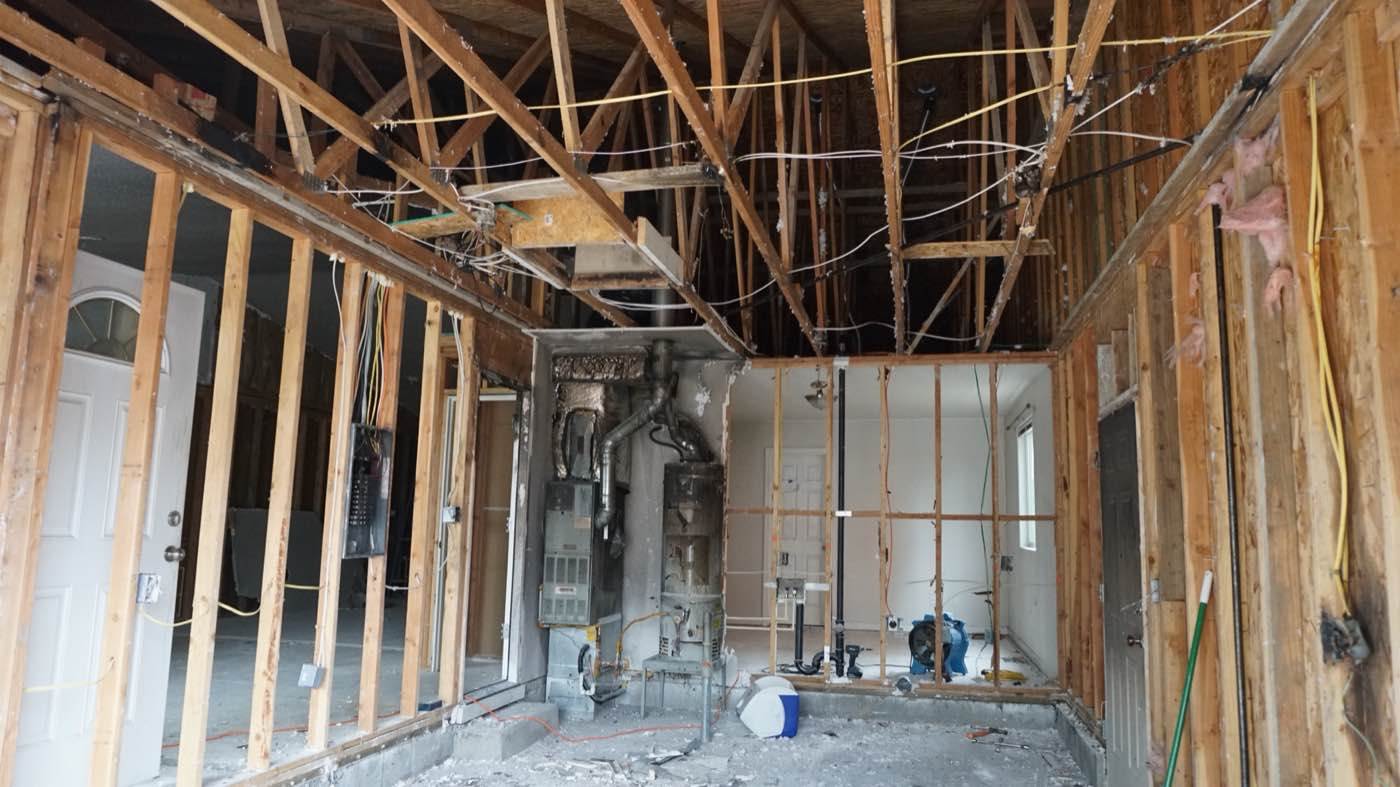
Where smoke goes after the fire is out — the whole-house map
Flames damage one room; smoke, soot, and firefighting water reach the whole house. Here's where a fire loss actually travels — and why cleanup is more than repainting.
Tap or Tab to a numbered point on the diagram to see what happens there — and how we resolve it. Every point is also written out in the list below.
All 7 points, written out
-
Soot in the HVAC system
Often invisible
Smoke travels through ductwork during the fire, and a contaminated system can re-spread soot and odor to cleaned rooms for weeks.
Summit: We evaluate and clean the HVAC system as part of the fire scope, not as an afterthought.
-
Smoke inside wall cavities
Often invisible
Pressurized smoke pushes through outlets, gaps, and top plates into wall cavities, leaving residue where no brush can reach.
Summit: We check cavities near the loss with meters and open or seal them based on what the readings show.
-
Attic smoke & insulation
Often invisible
Hot smoke rises into the attic, where loose insulation soaks up odor that drifts back down every warm day.
Summit: We inspect the attic on every significant smoke loss and remove odor-loaded insulation when cleaning can't recover it.
-
Odor absorbed into framing & soft goods
Often invisible
Framing, carpet, upholstery, and clothing absorb smoke odor at a molecular level — surface wiping alone won't remove it.
Summit: We pair source cleaning with odor strategies like hydroxyl treatment, chosen for occupied homes.
-
Corrosive residue on electronics & wiring
Often invisible
Soot is acidic — it etches circuit boards, wiring, and metal finishes in the days after the fire, even in rooms that never saw flame.
Summit: We prioritize assessing and cleaning electronics early, before corrosion becomes permanent.
-
Water damage from firefighting
Visible
The water that put the fire out soaks floors, walls, and everything below the fire room — most fire losses are also water losses.
Summit: We run structural drying alongside fire cleanup so a fire claim doesn't quietly become a mold claim.
-
Structural charring behind finishes
Often invisible
Fire can char framing inside walls and ceilings while the drywall over it looks merely smoke-stained.
Summit: We expose and evaluate the structure where heat traveled, and rebuild under Oregon CCB# 153107 and Washington L&I# SUMMICG857ML licensing.
Worried any of these points describes your home? Moisture meters and a trained eye settle it in one visit — the look is free.
Questions we hear about this
Will ozone fix smoke smell?
It can be useful in specific unoccupied settings, but it is not a substitute for source cleaning and has safety constraints. Summit chooses odor methods based on the loss.
Why does the smell get worse when HVAC runs?
The system may be moving odor from contaminated returns, filters, cavities, or surfaces. Have the air path assessed before assuming the room itself is the only source.
Can smoke odor be removed completely?
Often, yes, when source residue and affected contents are handled correctly. Masking products alone rarely hold.
Next step
You understand the problem — now weigh your options.
Side-by-side comparisons show where DIY genuinely works, what the methods differ on, and how restoration companies actually vary.