
Fire and smoke restoration cost is not priced from how dramatic the flames looked. It is priced from what burned, what smoke touched, what must be cleaned versus replaced, and whether odor moved into contents, cavities, or the air-handling system. A small kitchen fire can create more cleaning work than a larger contained exterior event if protein residue and odor traveled through the home.
For covered claims, Summit documents the loss to carrier standards, then builds the estimate from the room-by-room scope. Your policy still controls coverage, but the first job is making the physical scope complete: make-safe, clean, deodorize, contents, and rebuild.
What moves the estimate?
Soot type and residue chemistry
DependsDry soot, wet soot, protein residue, and oily smoke all clean differently. The wrong first wipe can set stains permanently, so testing residue before cleaning affects labor and sequence.
How far smoke and odor traveled
Raises costSmoke follows pressure, doors, returns, and cavities. Rooms untouched by flame may still need HEPA filtration, surface cleaning, sealing, or odor treatment.
Contents and pack-out needs
Raises costSoft goods, electronics, documents, and furniture add inventory, cleaning, storage, and replacement decisions beyond the building shell.
Emergency board-up and make-safe work
DependsSecuring openings, tarping, temporary power decisions, and debris hazards happen before deep cleaning and can be the first major line items.
Rebuild complexity
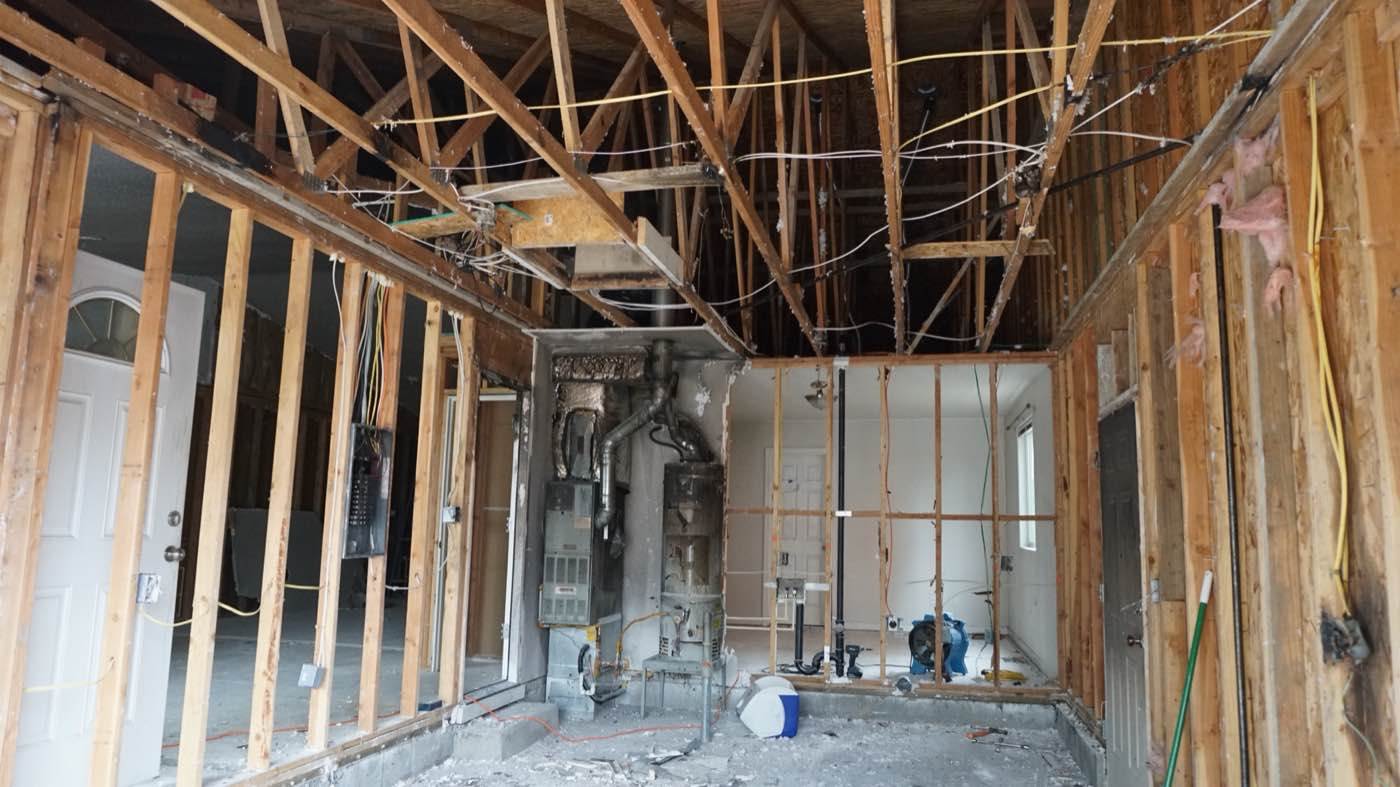
Raises costCharred framing, smoke-damaged drywall, matching finishes, and code-required repairs shift the job from cleaning into reconstruction.
Early stabilization
Lowers costFast soot removal and humidity control reduce corrosion, staining, and odor set-in, especially on metals, stone, fixtures, and appliances.
How insurance changes what you pay
Fire and smoke losses are commonly insured, but coverage follows the cause, policy terms, and approved scope. Smoke-only losses, off-premises smoke exposure, and contents questions all need documentation rather than assumptions.
Summit documents soot, odor, contents, emergency stabilization, and rebuild line items for carrier review. We are deliberately not a carrier preferred vendor; the scope is written for the loss in front of us.
Where this guidance comes from
No dollar figures are published here because Summit has not provided approved price ranges, and national fire-restoration averages do not know soot type, contents load, or odor path. The page is factor-based by design.
The factor structure follows IICRC fire and smoke restoration practice: identify residue, protect safety, clean by surface/material, manage odor sources, and verify before rebuild finishes close assemblies.
Below the surface · Fire & smoke damage
Where smoke goes after the fire is out — the whole-house map
Flames damage one room; smoke, soot, and firefighting water reach the whole house. Here's where a fire loss actually travels — and why cleanup is more than repainting.
Tap or Tab to a numbered point on the diagram to see what happens there — and how we resolve it. Every point is also written out in the list below.
All 7 points, written out
-
Soot in the HVAC system
Often invisible
Smoke travels through ductwork during the fire, and a contaminated system can re-spread soot and odor to cleaned rooms for weeks.
Summit: We evaluate and clean the HVAC system as part of the fire scope, not as an afterthought.
-
Smoke inside wall cavities
Often invisible
Pressurized smoke pushes through outlets, gaps, and top plates into wall cavities, leaving residue where no brush can reach.
Summit: We check cavities near the loss with meters and open or seal them based on what the readings show.
-
Attic smoke & insulation
Often invisible
Hot smoke rises into the attic, where loose insulation soaks up odor that drifts back down every warm day.
Summit: We inspect the attic on every significant smoke loss and remove odor-loaded insulation when cleaning can't recover it.
-
Odor absorbed into framing & soft goods
Often invisible
Framing, carpet, upholstery, and clothing absorb smoke odor at a molecular level — surface wiping alone won't remove it.
Summit: We pair source cleaning with odor strategies like hydroxyl treatment, chosen for occupied homes.
-
Corrosive residue on electronics & wiring
Often invisible
Soot is acidic — it etches circuit boards, wiring, and metal finishes in the days after the fire, even in rooms that never saw flame.
Summit: We prioritize assessing and cleaning electronics early, before corrosion becomes permanent.
-
Water damage from firefighting
Visible
The water that put the fire out soaks floors, walls, and everything below the fire room — most fire losses are also water losses.
Summit: We run structural drying alongside fire cleanup so a fire claim doesn't quietly become a mold claim.
-
Structural charring behind finishes
Often invisible
Fire can char framing inside walls and ceilings while the drywall over it looks merely smoke-stained.
Summit: We expose and evaluate the structure where heat traveled, and rebuild under Oregon CCB# 153107 and Washington L&I# SUMMICG857ML licensing.
Worried any of these points describes your home? Moisture meters and a trained eye settle it in one visit — the look is free.
Questions we hear about this
Why can a small fire be expensive to restore?
Because smoke and odor travel. A small cooking fire may leave protein residue through cabinets, ceilings, contents, and air paths even when flame damage is localized.
Does smoke odor always mean everything must be replaced?
No. Many hard surfaces and some contents can be cleaned or deodorized. Porous, heat-damaged, or heavily odor-loaded materials may be better documented for replacement.
What is the fastest way to control fire restoration cost?
Secure the property, document before moving items, and start soot/odor stabilization early. Waiting lets residue etch surfaces and odor settle deeper.
Next step
Ready to act? A live coordinator answers 24/7.
One call gets documentation started, your carrier looped in, and a crew scheduled — on site within 2 hours for active emergencies in our service area.