
Sewage backups are the loss people most often underestimate — it looks like dirty water, so it gets treated like water. It isn't. Restoration standards classify sewage as Category 3 (“grossly contaminated”) water: it carries pathogens, and everything porous it touches is treated differently than a clean-water loss.
Here's what to do in the first hour, what makes this category different, and what honest cleanup involves.
What should I do immediately?
The safe first moves:
- Keep people and pets out of affected areas — especially children
- Stop using water in the house (every flush and drain feeds the backup)
- Turn off HVAC so air movement doesn't spread contamination
- Photograph the scene from clean ground — don't wade in for pictures
- Call for professional cleanup; this is a category where DIY has real health stakes
What should I absolutely not do?
Don't run fans — drying contaminated material in place aerosolizes it. Don't use a household vacuum or shop vac you plan to keep. Don't handle contaminated items bare-handed, and don't attempt disinfection before the source is contained and solids are removed; spraying disinfectant on standing sewage accomplishes nothing.
And don't assume a small backup is a small problem: what reaches the surface is often a fraction of what's inside floor assemblies and wall bases.
Why is Category 3 water treated so differently?
Restoration work follows the IICRC S500 water-damage standard, which scales the response to contamination. Clean supply-line water (Category 1) can often be dried in place. Sewage (Category 3) generally means porous materials that absorbed it — carpet and pad, drywall bottoms, insulation — are removed rather than dried, because contamination can't be reliably extracted from them.
That's not upselling; it's the standard of care. A contractor who offers to just dry a sewage loss is the red flag.
What caused it — and will it happen again?
Common culprits in Oregon homes: main-line blockages (roots are a frequent offender in older neighborhoods), municipal system surcharges during heavy rain, failed sump or ejector pumps, and collapsed clay laterals in older housing stock.
Cleanup restores the house; the plumbing diagnosis prevents round two. If backups recur, ask a plumber about a camera inspection of the lateral and whether a backwater valve makes sense for your home.
What does professional sewage cleanup involve?
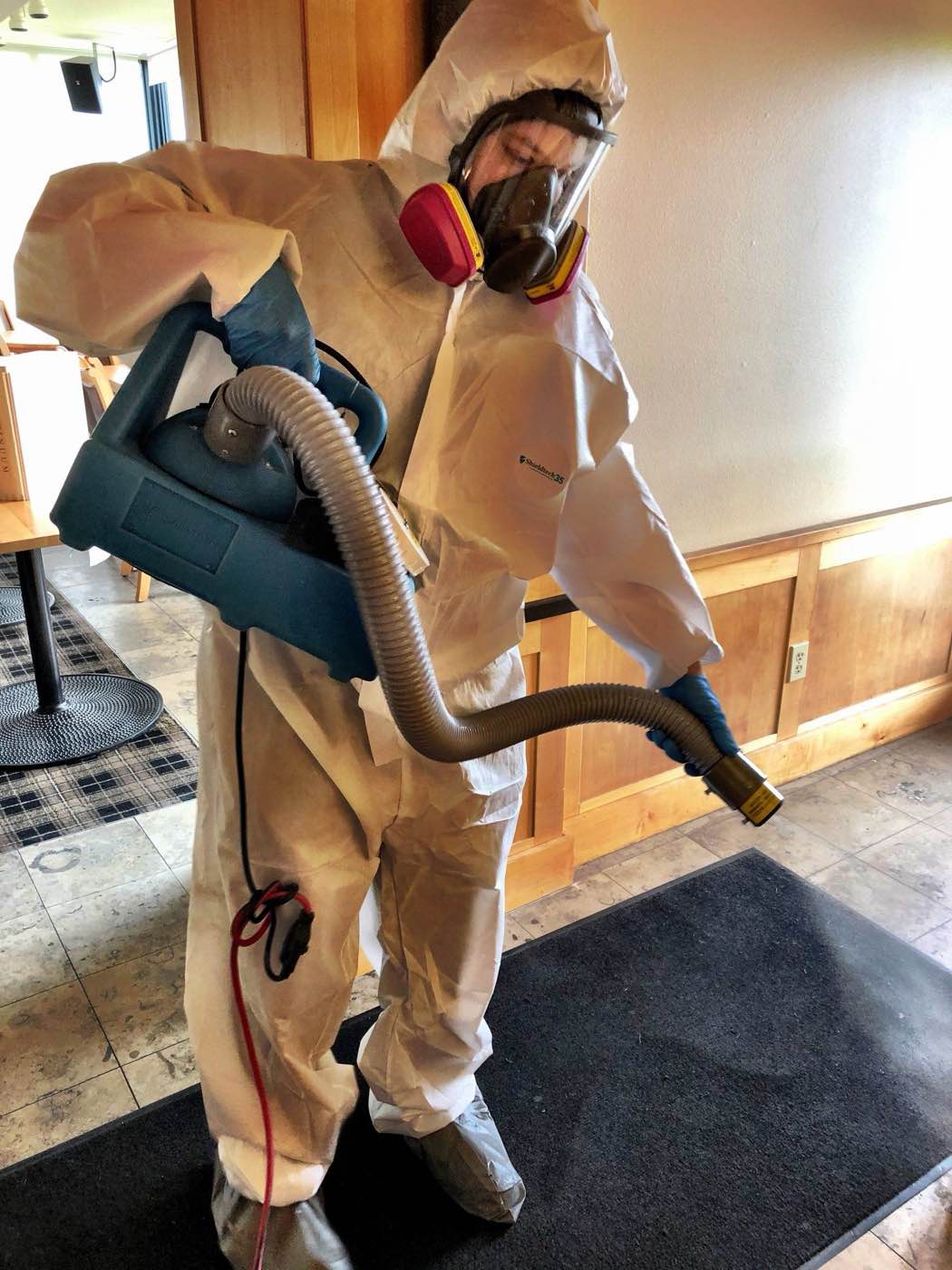
Containment and safety first, then removal of sewage and affected porous materials, cleaning and disinfection of what remains, drying with verification readings, and finally rebuild of what was removed. Summit's biohazard-trained crews handle the full sequence, and because we carry projects through reconstruction, the same scope runs from cleanup to the final walkthrough.
It's also a claim-sensitive loss: coverage for sewer backup is often an optional endorsement rather than a default, so documentation of cause and scope matters from hour one. Our line is answered live 24/7 (800-769-1553), with our 2-Hour Emergency Guarantee covering active water emergencies in our service area.
Below the surface · Trauma & biohazard
Why professional biohazard cleanup goes deeper than the surface
After a loss like this, families shouldn't carry the cleanup too. Written with care: here is why trained, discreet remediation matters — affected materials absorb more than the eye can see.
Tap or Tab to a numbered point on the diagram to see what happens there — and how we resolve it. Every point is also written out in the list below.
All 6 points, written out
-
Porous materials
Often invisible
Carpet, pad, and upholstery are absorbent — surface cleaning can't reach what porous materials have taken in.
Summit: We assess what can be safely sanitized and remove what cannot, with clear explanation at every step.
-
Between floor layers
Often invisible
Fluids seep through seams into the underlayment and subfloor, beneath flooring that appears clean after wiping.
Summit: We check between the layers and treat or remove the subfloor where seepage has reached it.
-
Wall cavities at the baseboard
Often invisible
Liquid follows the floor edge under baseboards and into the wall cavity, out of reach of any surface cleaning.
Summit: We inspect the baseboard line and open the cavity where needed so nothing is sealed in.
-
HVAC circulation
Often invisible
The home's air system can carry odor and airborne particulates to rooms far from the affected area.
Summit: We evaluate the HVAC pathway and include it in the remediation scope when it's involved.
-
Odor at the source
Often invisible
Odor persists when the source material remains — masking agents fade, and the reminder returns.
Summit: We remove or treat the source itself, then verify the air before we call the space done.
-
Sanitization & discreet disposal
Often invisible
Affected materials can't go out with household trash, and 'looks clean' isn't a sanitization standard.
Summit: We handle certified disposal in unmarked discretion where requested, and verify sanitization before returning the space to you.
Worried any of these points describes your home? Moisture meters and a trained eye settle it in one visit — the look is free.
Questions we hear about this
Is a sewage backup covered by homeowners insurance?
Often only if you carry a sewer/water-backup endorsement — it's an add-on with many carriers rather than default coverage. Check your policy or ask your agent; if you don't have the endorsement, it's one of the more valuable inexpensive additions Oregon homeowners can make.
Can carpet be saved after a sewage backup?
Carpet and pad that absorbed Category 3 water are removed under the standard of care — contamination can't be reliably extracted from them. Hard, non-porous flooring can often be cleaned and disinfected.
How long do we need to stay out of the affected area?
Until solids and contaminated materials are removed, surfaces are cleaned and disinfected, and the area is dry. Your crew will walk the timeline with you — it depends on the extent and what had to be removed.
The backup was from the city main — who pays?
Report it to both the city and your carrier. Municipal liability varies and takes time to resolve; your own policy (especially with a backup endorsement) is usually the fastest path to getting cleanup started, and carriers pursue reimbursement afterward where it applies.
Next step
You understand the problem — now weigh your options.
Side-by-side comparisons show where DIY genuinely works, what the methods differ on, and how restoration companies actually vary.