
Finding mold triggers two common overreactions: panic-scrubbing it with bleach, or tearing into the wall to see how far it goes. Both usually make things worse — scrubbing and demolition send spores airborne, and bleach on porous materials doesn't kill roots.
The right first response is quieter: leave it alone, control moisture, and figure out what's feeding it. Here's the order that protects your air, your walls, and your options.
Why shouldn't I scrub or spray it right away?
Mold spreads by releasing spores, and physical disturbance is exactly what releases them. Scrubbing a colony on drywall can seed the rest of the room — which is why professional remediation happens inside containment with negative air pressure.
Bleach adds a second problem: on porous materials like drywall and wood, it whitens the surface while the growth structure survives below, and the added moisture can feed regrowth. Surface cleaning has its place on hard, non-porous materials — but not as the first move on a wall or ceiling.
What's actually feeding it?
Mold is a moisture symptom, always. Somewhere there's water: a slow plumbing leak, a roof or window intrusion, crawl space humidity, condensation on a cold wall, or a past flood that never fully dried.
Finding and fixing that source matters more than removing the visible growth — remove mold without fixing moisture and it returns. This is why Summit's remediation scope always includes moisture-source correction, not just removal.
How much can I handle myself?
EPA guidance draws a practical line around small patches (roughly ten square feet — about a three-foot square) on hard surfaces, where careful cleaning with appropriate protection is reasonable for a homeowner.
Beyond that — larger areas, growth on porous materials, mold inside walls or HVAC, or any growth that followed sewage or major water damage — containment and certified remediation are the responsible path. Summit's teams work under IICRC standards for mold remediation.
Should I test the mold first?
Usually not for visible growth — remediation protocols don't change much based on species, so testing visible mold often adds cost without changing the work. Testing earns its keep when mold is suspected but not visible, when air quality questions need answers, or when you need post-remediation verification.
We wrote a full guide on this decision: mold testing vs. inspection — which you actually need.
What are the health considerations?
Mold can affect indoor air quality, and people with allergies, asthma, or immune conditions are commonly more sensitive to it. Reactions vary person to person, and this guide can't assess yours — if anyone in the home is experiencing symptoms they connect to mold, talk to your doctor.
From the building side, our job is removing the exposure: containment, removal, air filtration, and fixing the moisture that caused it.
What does professional remediation actually involve?
A certified remediation typically runs:
- Inspection and moisture mapping — where the growth is, and what's feeding it
- Containment with negative air pressure so spores don't spread during work
- Removal of affected porous materials; cleaning of salvageable surfaces
- HEPA air filtration during and after the work
- Moisture-source repair — the step that keeps it from coming back
- Verification that the area meets clearance before containment comes down
Below the surface · Mold
Where mold hides — the places a flashlight never reaches
Mold grows where moisture sits and light doesn't — which is why what you can see is rarely the whole colony. These are the places we check on every remediation.
Tap or Tab to a numbered point on the diagram to see what happens there — and how we resolve it. Every point is also written out in the list below.
All 8 points, written out
-
Behind drywall & wallpaper
Often invisible
The backside of drywall and the paste under wallpaper feed mold in the dark — a wall can look clean while the cavity side is colonized.
Summit: We inspect with moisture meters and open walls under containment, so spores don't spread to clean rooms.
-
Under carpet & pad
Often invisible
Carpet pad holds moisture for days after a leak, and mold establishes between pad and subfloor before any smell reaches the room.
Summit: We lift flooring at the wet edge, remove unsalvageable pad, and treat the subfloor beneath it.
-
Attic roof sheathing
Often invisible
Roof leaks and poor attic ventilation let condensation feed mold across the underside of the roof deck — invisible unless someone climbs up.
Summit: We remediate the sheathing and flag the ventilation or leak problem that caused it.
-
Crawl space framing
Often invisible
Damp Pacific Northwest crawl spaces grow mold on joists and posts that quietly affects the air in the living space above.
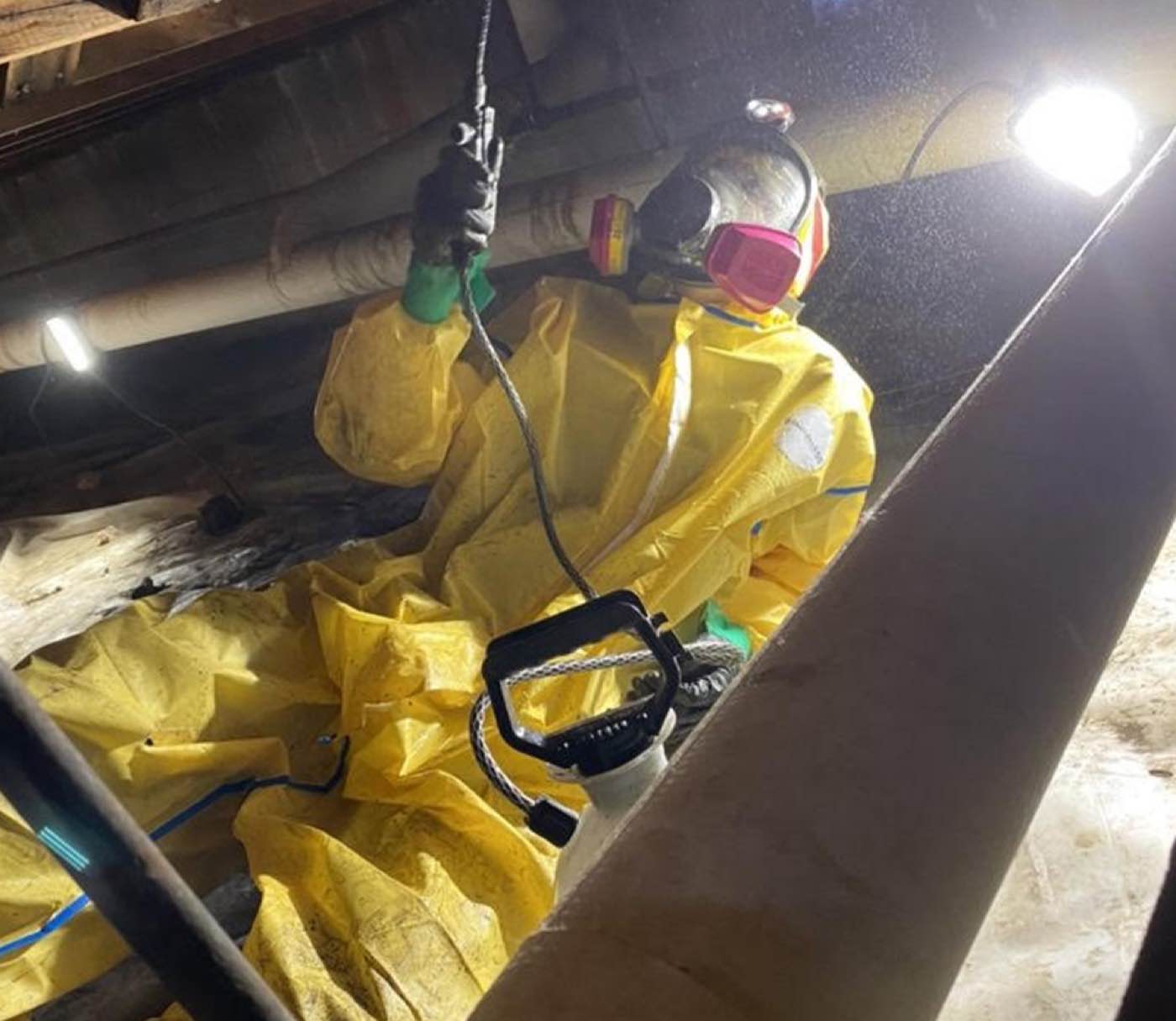
Summit: Our crews suit up and remediate crawl space framing directly — it's some of our most common work.
-
Inside the HVAC system
Often invisible
Moisture in ducts or at the air handler lets mold grow inside the one system that touches every room.
Summit: We inspect the HVAC system during remediation and clean it when growth or spore load calls for it.
-
Window sills & frames
Visible
Winter condensation on windows feeds mold along sills, frames, and the wall below — one of the few places you can watch it happen.
Summit: We clean the visible growth and check whether the wall below the window is wet inside.
-
Spores in the air
Often invisible
Disturbed mold releases spores that circulate house-wide, which is how a basement problem becomes a bedroom symptom.
Summit: We work under containment with negative air and HEPA filtration so remediation doesn't spread the problem.
-
The moisture source
Often invisible
Every colony has a water source — a slow leak, condensation, or ground moisture. Kill the mold without finding it and the mold returns.
Summit: We trace the moisture to its source and make fixing it part of the scope, not a footnote.
Worried any of these points describes your home? Moisture meters and a trained eye settle it in one visit — the look is free.
Questions we hear about this
Is black-colored mold automatically the dangerous kind?
No — color is a poor identifier. Many species look black, and the notorious one (Stachybotrys chartarum) can't be confirmed by eye. Treat any significant indoor growth the same way: control moisture, avoid disturbing it, and remediate properly. Our black mold guide covers this in depth.
Can I just paint over mold?
No. Paint — even 'mold-killing' primer — over active growth traps the problem and fails as the colony continues under the film. Remove the growth and fix the moisture first; paint is for after clearance.
Does insurance cover mold remediation?
Coverage for mold remediation varies by policy and by the circumstances that caused the mold growth. Some policies may provide limited coverage under certain circumstances, while others contain specific limitations or exclusions. Your insurance carrier or agent can explain how your specific policy applies. Summit documents the moisture conditions, affected materials, and remediation work required.
How fast does mold grow after water damage?
Under the right conditions, microbial growth can begin on wet porous materials within days — which is why professional drying standards target complete structural drying, verified with moisture readings, rather than surface-dry appearances.
Next step
You understand the problem — now weigh your options.
Side-by-side comparisons show where DIY genuinely works, what the methods differ on, and how restoration companies actually vary.