
A musty smell after rain is moisture talking. It usually means something in the building got damp enough for microbial odors to activate, then air carried that odor into the living space. The source may be a crawl space, attic, wall cavity, basement, or air path rather than the room where you smell it.
The useful question is not “is it mold?” first. It is “what got wet when it rained, and how is that air reaching me?”
Where should I look first?
Start with places rain changes: foundation edges, crawl space vents, attic roof penetrations, chimney and skylight flashing, basement walls, and rooms below roof valleys. If the smell is strongest when HVAC starts, the odor may be in a return path, crawl, attic, or cavity the system pulls from.
When is it more than a nuisance?
Escalate when the smell has any visible or physical partner.
- Water staining, bubbling paint, or soft drywall.
- Efflorescence or damp masonry in a basement or crawl space.
- Visible growth on wood, drywall, or contents.
- Humidity that stays high after the rain ends.
- Recurring odor in the same weather pattern.
What does a professional check?
A moisture inspection traces the path with meters and thermal imaging, then checks the likely air connection. If visible growth is present, remediation focuses on containment, removal, drying, and source correction. If testing is needed, Summit coordinates with independent IEP/IH partners rather than performing mold testing in-house.
Below the surface · Mold
Where mold hides — the places a flashlight never reaches
Mold grows where moisture sits and light doesn't — which is why what you can see is rarely the whole colony. These are the places we check on every remediation.
Tap or Tab to a numbered point on the diagram to see what happens there — and how we resolve it. Every point is also written out in the list below.
All 8 points, written out
-
Behind drywall & wallpaper
Often invisible
The backside of drywall and the paste under wallpaper feed mold in the dark — a wall can look clean while the cavity side is colonized.
Summit: We inspect with moisture meters and open walls under containment, so spores don't spread to clean rooms.
-
Under carpet & pad
Often invisible
Carpet pad holds moisture for days after a leak, and mold establishes between pad and subfloor before any smell reaches the room.
Summit: We lift flooring at the wet edge, remove unsalvageable pad, and treat the subfloor beneath it.
-
Attic roof sheathing
Often invisible
Roof leaks and poor attic ventilation let condensation feed mold across the underside of the roof deck — invisible unless someone climbs up.
Summit: We remediate the sheathing and flag the ventilation or leak problem that caused it.
-
Crawl space framing
Often invisible
Damp Pacific Northwest crawl spaces grow mold on joists and posts that quietly affects the air in the living space above.
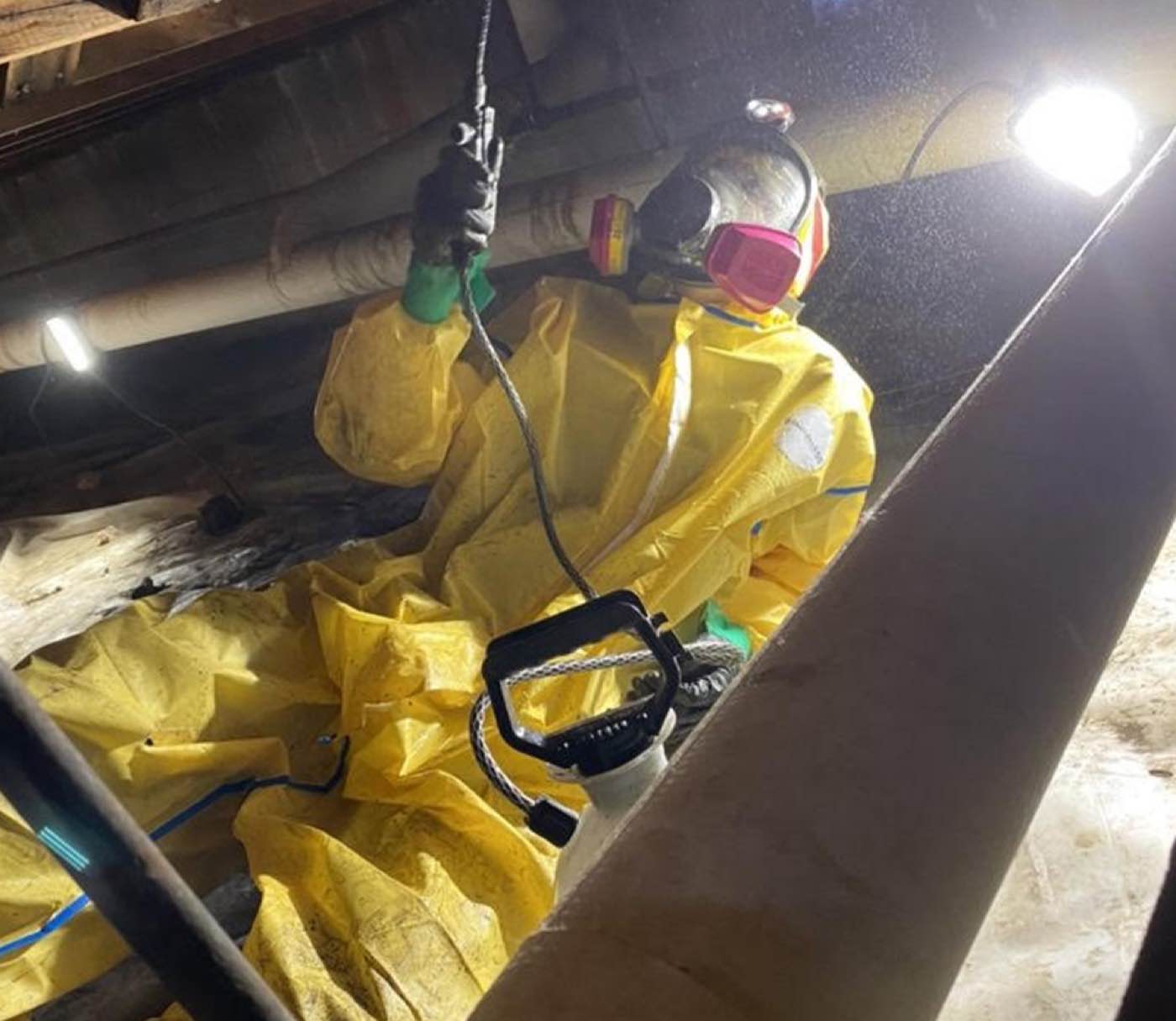
Summit: Our crews suit up and remediate crawl space framing directly — it's some of our most common work.
-
Inside the HVAC system
Often invisible
Moisture in ducts or at the air handler lets mold grow inside the one system that touches every room.
Summit: We inspect the HVAC system during remediation and clean it when growth or spore load calls for it.
-
Window sills & frames
Visible
Winter condensation on windows feeds mold along sills, frames, and the wall below — one of the few places you can watch it happen.
Summit: We clean the visible growth and check whether the wall below the window is wet inside.
-
Spores in the air
Often invisible
Disturbed mold releases spores that circulate house-wide, which is how a basement problem becomes a bedroom symptom.
Summit: We work under containment with negative air and HEPA filtration so remediation doesn't spread the problem.
-
The moisture source
Often invisible
Every colony has a water source — a slow leak, condensation, or ground moisture. Kill the mold without finding it and the mold returns.
Summit: We trace the moisture to its source and make fixing it part of the scope, not a footnote.
Worried any of these points describes your home? Moisture meters and a trained eye settle it in one visit — the look is free.
Questions we hear about this
Can a musty smell happen without visible mold?
Yes. Odor can come from a wet cavity, crawl space, attic, or material hidden behind finishes long before growth is visible in the room.
Should I buy a home mold test kit?
A kit may confirm spores exist, but spores exist everywhere. Inspection and moisture tracing usually answer the actionable question faster: where is the source?
Is this an emergency?
Not always, but recurring rain-linked mustiness means moisture is entering or staying somewhere. Find it before it becomes a larger remediation scope.
Next step
You understand the problem — now weigh your options.
Side-by-side comparisons show where DIY genuinely works, what the methods differ on, and how restoration companies actually vary.