
Mold remediation estimates vary so widely because the word “mold” covers everything from a bathroom corner to a contaminated crawl space under the whole house. The estimate is really pricing four things: how big the containment has to be, how much material must come out, what it takes to fix the moisture source, and how the result gets verified.
Beware of both extremes when comparing quotes: scare-priced bids that treat every spot like a hazmat scene, and too-cheap bids that skip containment and source repair — the version that grows back. The factors below are how you tell the difference.
What moves the estimate?
Affected area size and location
Raises costA small, reachable patch needs source containment; larger or multi-area growth needs full containment with negative air. Crawl spaces and attics add access labor to every hour of the job.
The moisture source and its repair
DependsRemediation without source correction is rented cleanliness. A failed supply line is a quick fix; grading, drainage, or ventilation problems are bigger ones — but whatever it is belongs in the scope.
What the mold is growing on
Raises costNon-porous surfaces clean and stay. Porous materials with active growth — drywall, insulation, carpet pad — are removed and replaced, which moves cost from cleaning into demolition and rebuild.
Containment and air management
Raises costPlastic containment, zipper access, and HEPA negative air are what keep a remediation from spreading spores through the house. They're per-day, per-area line items — and the first thing cut-rate bids cut.
Clearance / post-remediation verification
DependsIndependent clearance testing (when warranted) and verified dry readings prove the job worked. A modest line item that protects the whole spend.
Acting before it spreads
Lowers costMold amplifies where moisture persists. Fixing the leak and calling at first sign keeps the containment small — the single best cost lever a homeowner has.
How insurance changes what you pay
Coverage for mold remediation varies by policy and by the circumstances that caused the mold growth. Some policies may provide limited coverage under certain circumstances, while others contain specific limitations or exclusions. Your insurance carrier or agent can explain how your specific policy applies. Summit documents the moisture conditions, affected materials, and remediation work required. Moisture documentation from day one is what makes those conditions clear.
When mold is part of a covered water claim, Summit documents the chain — the loss, the moisture readings, the growth — to carrier standards and works directly with your adjuster on the restoration scope and pricing. If your carrier has already scoped a mold job and it feels off in either direction, bring the paperwork to a free inspection and we'll read it with you.
Where this guidance comes from
No dollar figures here by policy: Summit hasn't published pricing, and borrowed national averages would be invented numbers with our name on them. Every real mold job gets a written, line-item scope after inspection — this page exists so that scope reads as sense instead of jargon.
The structure follows the IICRC S520 mold remediation standard: assessment, containment levels, removal, cleaning, drying, and verification.
Below the surface · Mold
Where mold hides — the places a flashlight never reaches
Mold grows where moisture sits and light doesn't — which is why what you can see is rarely the whole colony. These are the places we check on every remediation.
Tap or Tab to a numbered point on the diagram to see what happens there — and how we resolve it. Every point is also written out in the list below.
All 8 points, written out
-
Behind drywall & wallpaper
Often invisible
The backside of drywall and the paste under wallpaper feed mold in the dark — a wall can look clean while the cavity side is colonized.
Summit: We inspect with moisture meters and open walls under containment, so spores don't spread to clean rooms.
-
Under carpet & pad
Often invisible
Carpet pad holds moisture for days after a leak, and mold establishes between pad and subfloor before any smell reaches the room.
Summit: We lift flooring at the wet edge, remove unsalvageable pad, and treat the subfloor beneath it.
-
Attic roof sheathing
Often invisible
Roof leaks and poor attic ventilation let condensation feed mold across the underside of the roof deck — invisible unless someone climbs up.
Summit: We remediate the sheathing and flag the ventilation or leak problem that caused it.
-
Crawl space framing
Often invisible
Damp Pacific Northwest crawl spaces grow mold on joists and posts that quietly affects the air in the living space above.
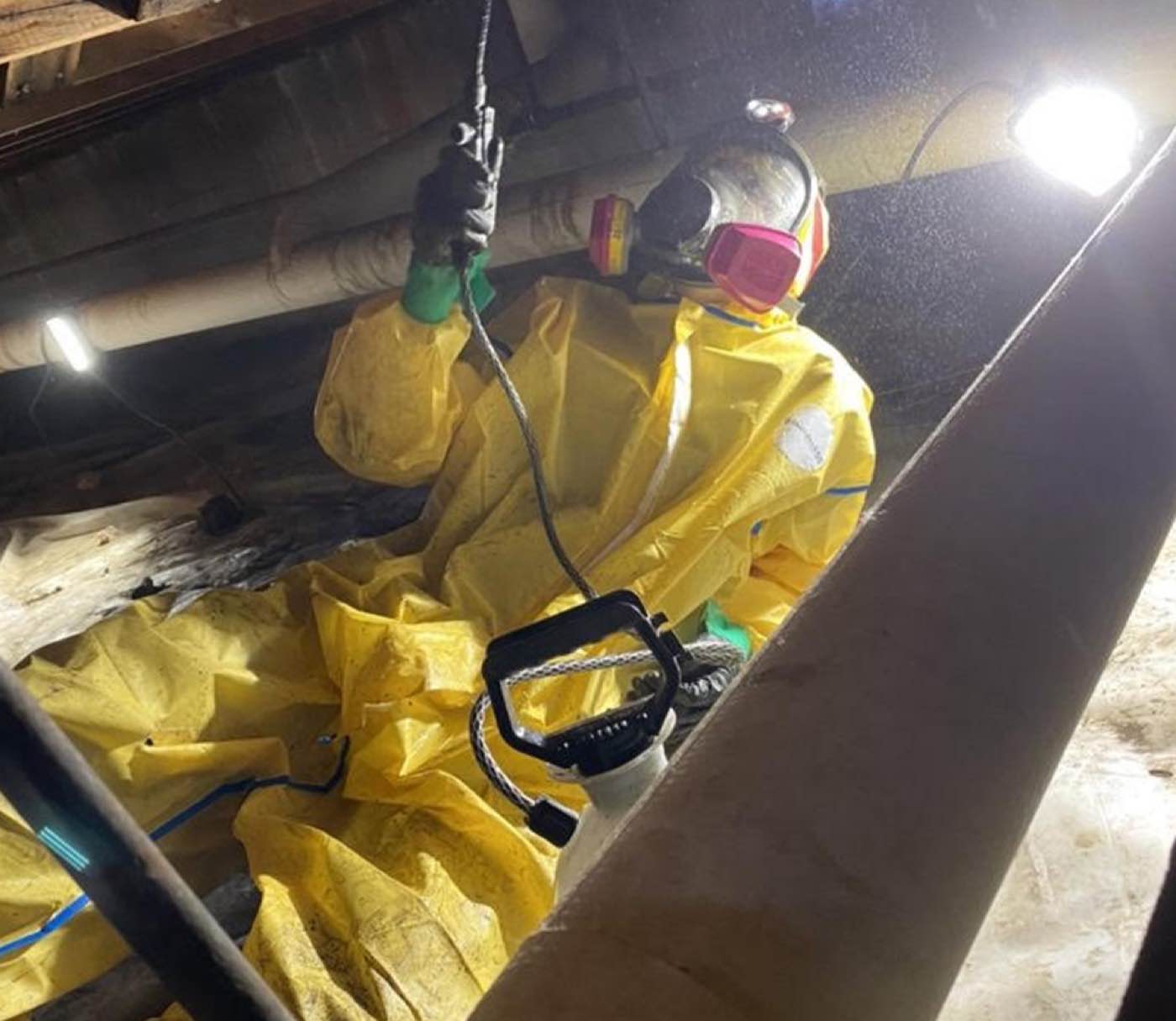
Summit: Our crews suit up and remediate crawl space framing directly — it's some of our most common work.
-
Inside the HVAC system
Often invisible
Moisture in ducts or at the air handler lets mold grow inside the one system that touches every room.
Summit: We inspect the HVAC system during remediation and clean it when growth or spore load calls for it.
-
Window sills & frames
Visible
Winter condensation on windows feeds mold along sills, frames, and the wall below — one of the few places you can watch it happen.
Summit: We clean the visible growth and check whether the wall below the window is wet inside.
-
Spores in the air
Often invisible
Disturbed mold releases spores that circulate house-wide, which is how a basement problem becomes a bedroom symptom.
Summit: We work under containment with negative air and HEPA filtration so remediation doesn't spread the problem.
-
The moisture source
Often invisible
Every colony has a water source — a slow leak, condensation, or ground moisture. Kill the mold without finding it and the mold returns.
Summit: We trace the moisture to its source and make fixing it part of the scope, not a footnote.
Worried any of these points describes your home? Moisture meters and a trained eye settle it in one visit — the look is free.
Questions we hear about this
Is mold remediation worth it, or can I just clean it myself?
Small growth on non-porous surfaces with a fixed source is a legitimate DIY job — see our honest guide to DIY boundaries. Recurring, hidden, or post-flood mold is a systems problem: cleaning the visible part changes what you see, not what's happening.
Does mold testing need to happen before remediation?
Not always. Visible growth doesn't need a lab to confirm it's mold — inspection and moisture mapping matter more. Testing earns its keep for hidden-mold questions, air-quality concerns, and post-remediation clearance. Our mold testing vs inspection guide covers when each pays off.
What happens if I ignore a small mold patch?
If its moisture source is truly gone, little — dormant mold doesn't spread. But if moisture persists, growth compounds quietly inside assemblies, and the eventual containment is measured in rooms instead of square feet. The smell test is honest: musty means moisture.
Next step
Ready to act? A live coordinator answers 24/7.
One call gets documentation started, your carrier looped in, and a crew scheduled — on site within 2 hours for active emergencies in our service area.