
Short answer: “mold removal” takes away the mold you can see; “mold remediation” treats the mold problem — containment, removal, cleaning the air, and above all fixing the moisture source that grew it. If the water source isn't part of the plan, the mold comes back, no matter how thorough the cleanup looked.
The terms get used interchangeably in marketing, which is exactly why they're worth decoding before you compare quotes. Two estimates that look similar can describe very different jobs.
Mold removal
Physical elimination of visible mold growth — cleaning or removing affected surfaces and materials. A legitimate part of every mold job, and occasionally all a small, source-fixed problem needs.
Mold remediation
The full process defined by the IICRC S520 standard: assess, contain, filter the air, remove growth and unsalvageable materials, clean, dry, and — the part that protects the work — correct the moisture source and verify the result.
Side by side
| Criteria | Mold removal | Mold remediation |
|---|---|---|
| What it treats | The visible symptom (growth on surfaces) | The system: growth + airborne spread + the moisture source feeding it |
| Containment & air filtration | Often skipped | Required — plastic containment, negative air, HEPA scrubbing sized to the job |
| Moisture-source correction | Out of scope | In scope, and the reason remediation lasts |
| Verification | Visual — “looks clean” | Moisture readings back to dry standard; clearance testing available when warranted |
| When it's enough | Small surface growth with a source you've already fixed | Anything recurring, hidden, larger than a small patch, or tied to an unresolved leak |
Choose mold removal when…
- The affected area is small and on a cleanable, non-porous surface.
- You've already found and fixed the moisture source — and it stayed fixed.
- There's no musty odor or staining suggesting growth inside assemblies.
Choose mold remediation when…
- Mold keeps returning in the same place — that's a source problem, not a cleaning problem.
- Growth covers a larger area, is inside walls or crawl spaces, or followed a water loss.
- Anyone in the home is sensitive and you need the air handled, not just the surface.
- An insurance claim is involved and the scope needs to hold up to review.
The honest bottom line
The honest bottom line: removal is a task, remediation is a fix. When a problem is genuinely small and its cause is genuinely resolved, cleaning it properly yourself or paying for simple removal is reasonable — we say so, because trust matters more to us than a job ticket.
For everything else, buy remediation and make sure the estimate says so: containment, negative air, source correction, and verified dry readings should all be visible line items. Summit's crews are IICRC certified and put the moisture fix in the scope — and if you already have an estimate, a scope review should tell you plainly which of these two jobs it actually describes.
Below the surface · Mold
Where mold hides — the places a flashlight never reaches
Mold grows where moisture sits and light doesn't — which is why what you can see is rarely the whole colony. These are the places we check on every remediation.
Tap or Tab to a numbered point on the diagram to see what happens there — and how we resolve it. Every point is also written out in the list below.
All 8 points, written out
-
Behind drywall & wallpaper
Often invisible
The backside of drywall and the paste under wallpaper feed mold in the dark — a wall can look clean while the cavity side is colonized.
Summit: We inspect with moisture meters and open walls under containment, so spores don't spread to clean rooms.
-
Under carpet & pad
Often invisible
Carpet pad holds moisture for days after a leak, and mold establishes between pad and subfloor before any smell reaches the room.
Summit: We lift flooring at the wet edge, remove unsalvageable pad, and treat the subfloor beneath it.
-
Attic roof sheathing
Often invisible
Roof leaks and poor attic ventilation let condensation feed mold across the underside of the roof deck — invisible unless someone climbs up.
Summit: We remediate the sheathing and flag the ventilation or leak problem that caused it.
-
Crawl space framing
Often invisible
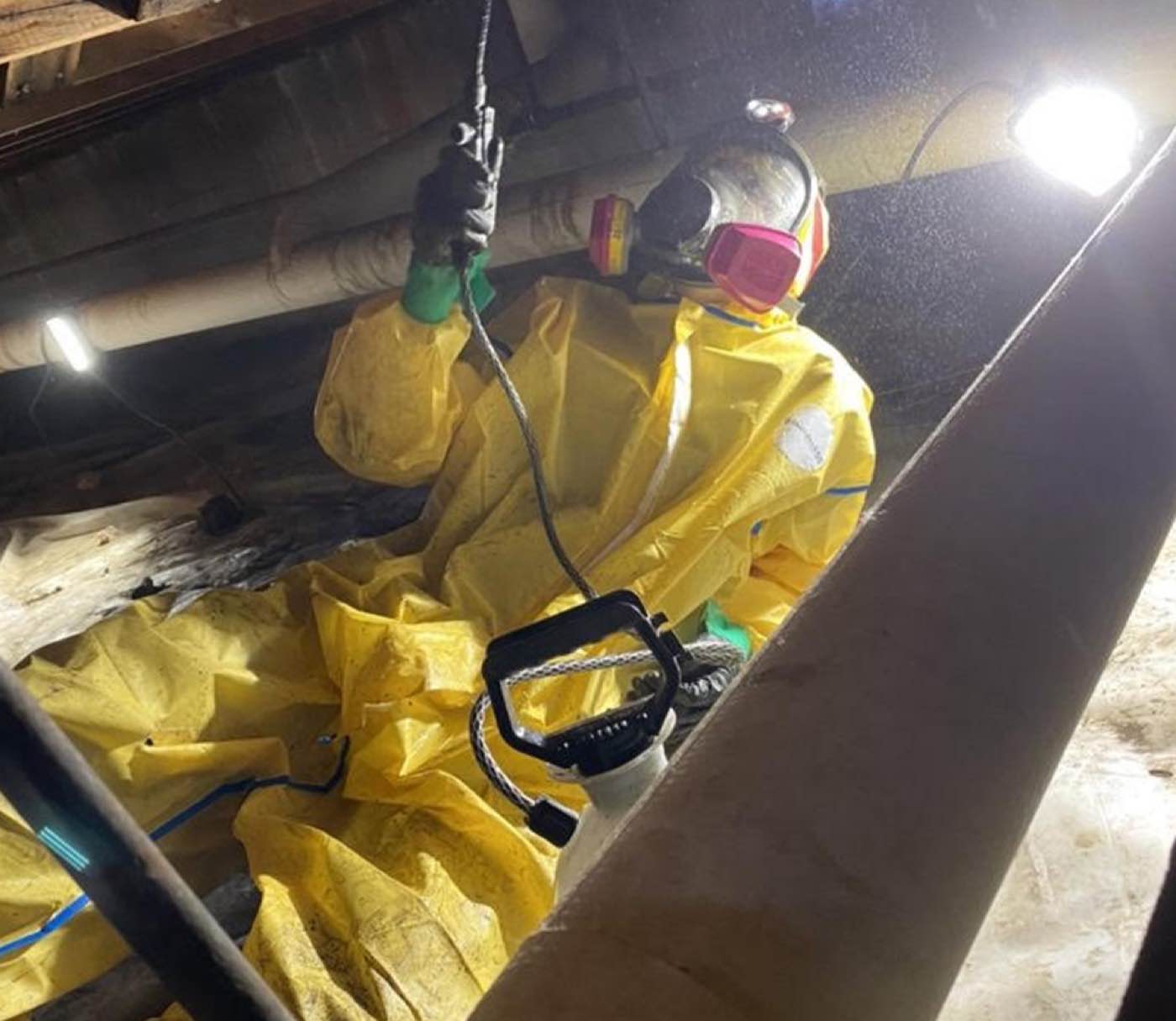
Damp Pacific Northwest crawl spaces grow mold on joists and posts that quietly affects the air in the living space above.
Summit: Our crews suit up and remediate crawl space framing directly — it's some of our most common work.
-
Inside the HVAC system
Often invisible
Moisture in ducts or at the air handler lets mold grow inside the one system that touches every room.
Summit: We inspect the HVAC system during remediation and clean it when growth or spore load calls for it.
-
Window sills & frames
Visible
Winter condensation on windows feeds mold along sills, frames, and the wall below — one of the few places you can watch it happen.
Summit: We clean the visible growth and check whether the wall below the window is wet inside.
-
Spores in the air
Often invisible
Disturbed mold releases spores that circulate house-wide, which is how a basement problem becomes a bedroom symptom.
Summit: We work under containment with negative air and HEPA filtration so remediation doesn't spread the problem.
-
The moisture source
Often invisible
Every colony has a water source — a slow leak, condensation, or ground moisture. Kill the mold without finding it and the mold returns.
Summit: We trace the moisture to its source and make fixing it part of the scope, not a footnote.
Worried any of these points describes your home? Moisture meters and a trained eye settle it in one visit — the look is free.
Questions we hear about this
Is mold remediation always more expensive than removal?
Usually, because it includes more work — containment, filtration, source repair, verification. But removal that has to be repeated every rainy season costs more over time than one remediation that ends the problem.
Can mold be removed permanently?
Mold spores are everywhere in outdoor and indoor air; “zero mold” isn't a real standard. What's permanent is removing active growth and denying it moisture — no moisture, no colony.
Does insurance cover mold remediation?
Coverage for mold remediation varies by policy and by the circumstances that caused the mold growth. Some policies may provide limited coverage under certain circumstances, while others contain specific limitations or exclusions. Your insurance carrier or agent can explain how your specific policy applies. Summit documents the moisture conditions, affected materials, and remediation work required.
Next step
Decided which way you're leaning? Put numbers behind it.
The cost guides show factor by factor what moves a restoration estimate — and a free inspection turns that into a real scoped number.