
Floor buckling after a leak means water reached the assembly below the wear surface. The question is how deep it went, how long it stayed, and what the floor is made of. Hardwood, laminate, vinyl plank, carpet and pad, and subfloor all fail differently.
The decision to save or replace should follow moisture readings, not optimism. Many floors that look dramatic early can be saved with fast specialty drying; many floors that look fine on top are wet underneath.
What do different floor symptoms mean?
Cupping usually means the underside of wood is wetter than the top. Crowning can happen when the top dries differently or after sanding too soon. Laminate swelling at seams usually means the core absorbed water. Vinyl plank can trap moisture below it even when the surface looks perfect.
What factors decide save versus replace?
The main variables are readable in the first inspection.
- Water category: clean supply water is more salvageable than contaminated water.
- Time wet: the first 24–48 hours matter most for porous materials.
- Material type: hardwood, engineered wood, laminate, carpet, and slab each dry differently.
- Subfloor readings: the floor covering may be dry while the layer below is not.
- Odor or visible growth: microbial signs move the decision toward removal and remediation.
What should I avoid doing?
Do not sand, seal, or reinstall finishes before the assembly is verified dry. Do not run heat alone and assume faster is better; aggressive heat can move moisture into cavities or damage materials. Use professional drying when the floor is valuable enough to save.
Below the surface · Water damage
What water damage really touches — a look inside the walls
The puddle you can see is usually the smallest part of a water loss. Water wicks, travels, and pools out of sight — tap each numbered point to see where it goes and how we resolve it.
Tap or Tab to a numbered point on the diagram to see what happens there — and how we resolve it. Every point is also written out in the list below.
All 9 points, written out
-
Drywall above the water line
Often invisible
Standing water wicks up through drywall well above the stain you can see, so a 2-inch puddle can mean 2 feet of wet wall.
Summit: We map the true moisture line with meters and dry or remove drywall to that line — not just to the visible stain.
-
Wall-cavity insulation
Often invisible
Fiberglass insulation inside the wall soaks up water, compresses, and holds moisture against the framing long after surfaces feel dry.
Summit: We open the cavity where readings call for it, remove saturated insulation, and dry the framing directly.
-
Subfloor & underlayment
Often invisible
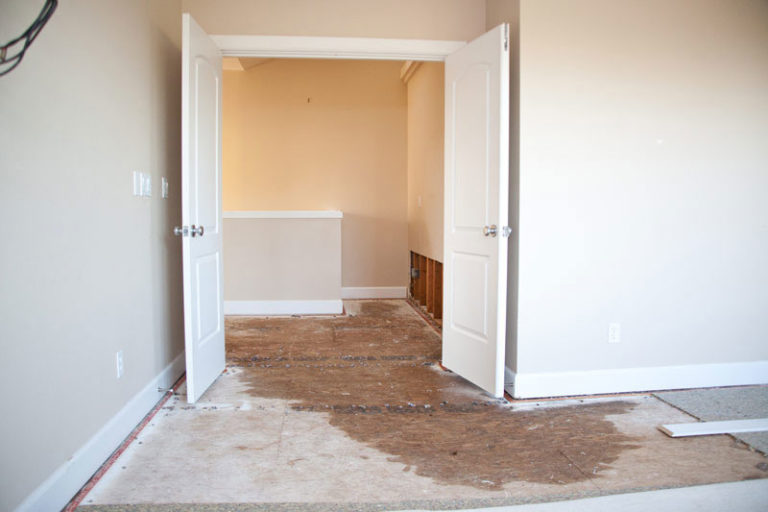
Water slips between flooring layers, swelling the underlayment and subfloor beneath finishes that still look fine on top.
Summit: We lift flooring where needed and dry or replace the subfloor so the new floor goes down on a sound, dry base.
-
Hardwood cupping
Visible
Hardwood boards absorb moisture from below and curl upward at the edges — cupping you can see and feel underfoot.
Summit: Caught early, specialty drying mats can often save cupped hardwood instead of tearing it out.
-
Cabinet toe-kicks
Often invisible
Water pools in the enclosed void under cabinets, where it can't evaporate and quietly damages the cabinet base.
Summit: We remove kick plates and move air through the void so cabinets dry in place whenever possible.
-
Sill plates & framing
Often invisible
The wood plates at the base of every wall sit right in the water path and can be critically wet within the first hour.
Summit: We direct-dry structural framing and log moisture readings until it verifiably meets dry standard.
-
Crawl space pooling & vapor
Often invisible
Water finds the crawl space, where it pools on the vapor barrier and feeds humidity back up into the house for weeks.
Summit: We extract standing water, dry the crawl space, and address the vapor barrier so moisture stops migrating upward.
-
HVAC ducts
Often invisible
Wet ductwork spreads humidity — and anything growing in it — to every room the system serves.
Summit: We inspect ducts on water losses and clean or dry them before the system runs again.
-
The 24–48 hour mold window
Often invisible
In Oregon's damp climate, hidden moisture behind baseboards and inside cavities can start growing mold within 24–48 hours.
Summit: We respond 24/7 and dry to standard fast, precisely because that window is short.
Worried any of these points describes your home? Moisture meters and a trained eye settle it in one visit — the look is free.
Questions we hear about this
Can buckled hardwood flatten again?
Sometimes, if the water was clean, the response was fast, and specialty drying starts before deformation becomes permanent. Moisture readings decide.
Can vinyl plank hide water?
Yes. The surface can look dry while water remains trapped below, especially over slab or underlayment.
Will insurance pay to replace flooring?
If the flooring cannot be restored to pre-loss condition, replacement may be part of the restoration scope Summit documents. Whether and how the policy responds is a coverage decision your carrier makes.
Next step
You understand the problem — now weigh your options.
Side-by-side comparisons show where DIY genuinely works, what the methods differ on, and how restoration companies actually vary.